
Civil engineering contractors, utility companies, and mining operators rarely buy a single type of heavy truck. A typical project fleet combines cargo truck mounted cranes, heavy tipper trucks, overhead aerial work platform trucks (bucket trucks), and breakdown recovery trucks. Across this construction and utility trucks group, factory pricing is governed less by cubic volume and more by lifting moment, subframe metallurgy, axle load rating, and hydraulic brand.
Because an under-specified crane subframe or thin dump-box floor leads to structural cracking within months on rough haul roads, comparing quotes purely on nominal tonne rating is one of the costliest mistakes in contractor procurement.
Truck Mounted Crane Pricing: Tonnage, Boom Type and Crane Brand
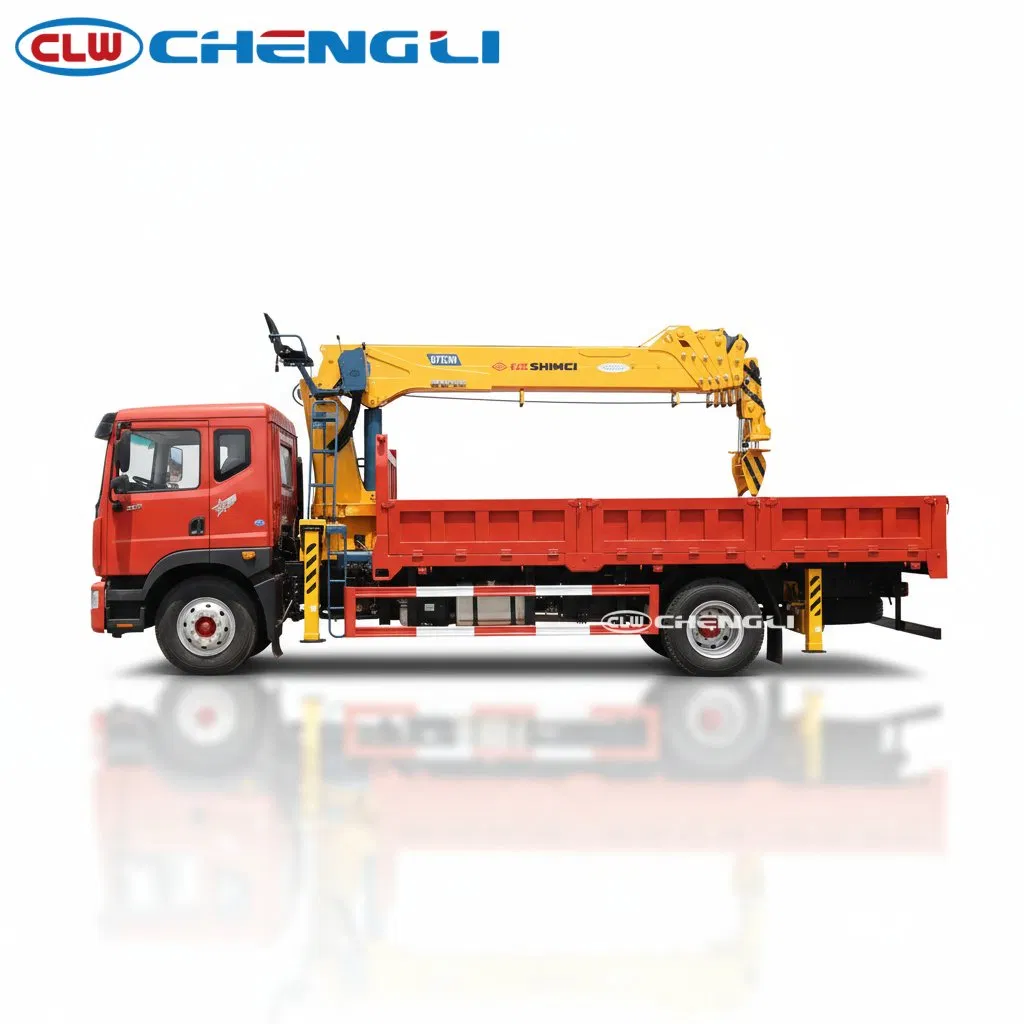
A truck mounted crane quote has three distinct cost centres: the cab-chassis, the crane assembly with its outriggers and hydraulic pump, and the reinforced subframe plus cargo dropside bed. Lifting capacity—from 3.2 tonnes on a compact 4x2 utility truck up to 16 tonnes on a heavy 6x4 or 8x4 chassis—drives both the crane price and the minimum chassis frame strength required to resist twisting loads.
The biggest structural price choice is telescopic straight boom versus articulated knuckle boom (folding boom). Telescopic straight-boom cranes (such as XCMG, SANY, or CLW straight-boom units) are more economical to purchase, easier to maintain, and popular across Africa, the Middle East, and construction and road building for lifting steel rebar, pipes, and poles with a wire-rope winch. Knuckle-boom cranes fold compactly behind the cab, work well inside tight urban sites, and can run hydraulic attachments like grabs or augers—but a knuckle boom of comparable lifting moment typically costs 25% to 55% more than a straight-boom crane, and European knuckle-boom brands (such as Palfinger or HIAB) push the crane share even higher.
Crane Capacity Class | Recommended Chassis | Relative Complete Truck Tier | Key Budget Swing Options |
|---|---|---|---|
3.2 – 5 tonnes | 4x2 light-medium | Entry (1.0x baseline) | Straight vs knuckle boom, 3 vs 4 hydraulic sections |
6.3 – 8 tonnes | 4x2 heavy / 6x4 | Mid (1.4x – 1.9x) | Rear hydraulic outriggers, 300 mm double-layer frame |
10 – 12 tonnes | 6x4 heavy-duty | Upper-Mid (2.1x – 2.8x) | Top-seat vs ground control, oil cooler, wireless remote |
14 – 16 tonnes | 6x4 heavy / 8x4 | Heavy (2.9x – 3.8x) | Heavy box-section subframe, dual-pump hydraulic system |
Tipper Truck Price Drivers: 4x2, 6x4 and 8x4 Dump Bodies
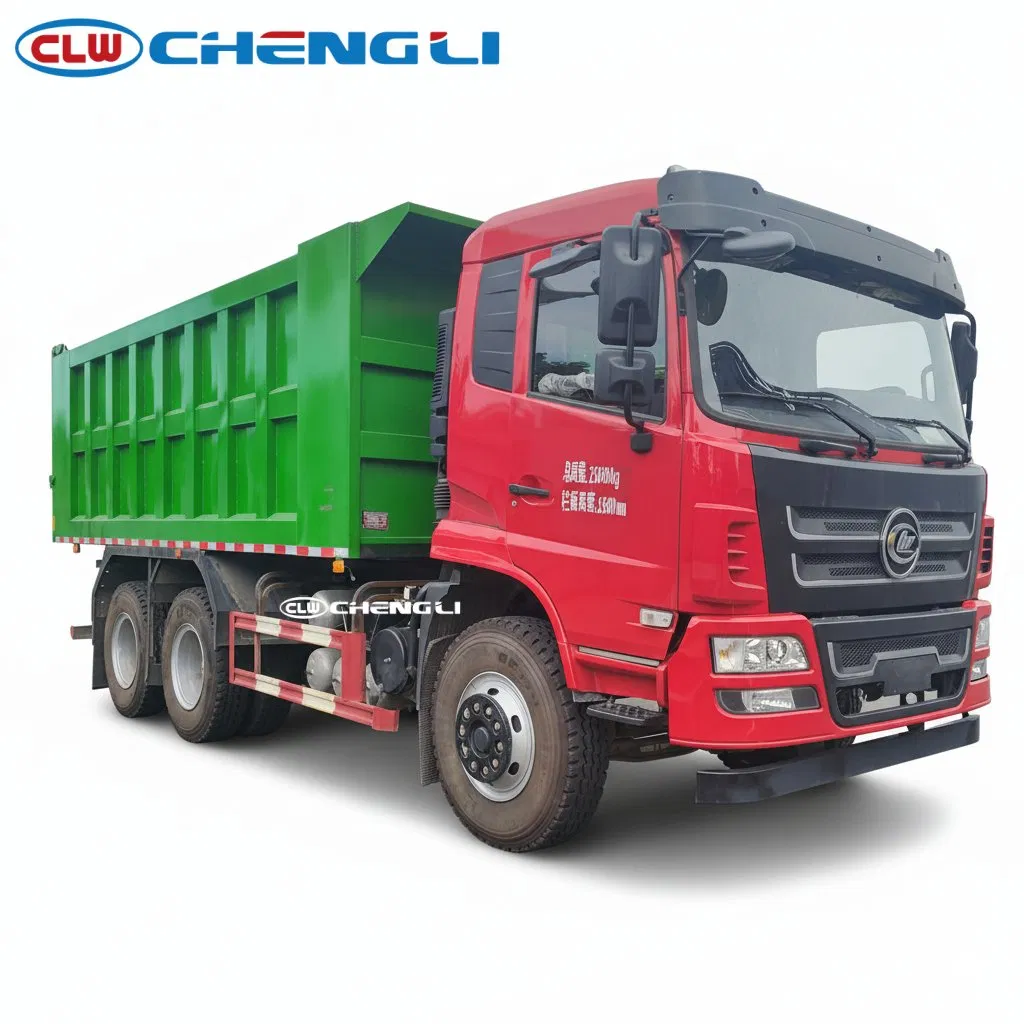
On a dump truck, roughly 65% to 75% of the ex-works price sits in the chassis and powertrain, while 25% to 35% sits in the dump box, subframe, and tipping hoist. Compact 4x2 tippers (5 to 10 m³) handle urban aggregates and municipal civil repairs. The global contractor standard is the 6x4 16 to 22 m³ heavy tipper—such as our 6x4 heavy tipper truck and reinforced construction tipper configuration—built on 371 to 430 hp Sinotruk HOWO special trucks or Shacman special trucks.
Three dump-body specifications separate a highway sand tipper from a quarry rock tipper. First is steel grade and thickness: a standard Q235B box with an 8 mm floor and 6 mm sides suits soil and gravel, whereas mining and quarrying rock haulage requires high-tensile T700/Q345B or Hardox 450 wear plate (often 10 mm floor and 8 mm sides), adding 8% to 16% to the tipper body cost. Second is body geometry: rectangular boxes maximise volume for sand, while U-shaped bodies shed wet clay cleanly and resist side-wall bowing. Third is the tipping cylinder: a Chinese front telescopic cylinder is cost-effective for normal duty, while a genuine HYVA front tipping kit adds roughly 4% to 8% to complete truck cost in exchange for global seal availability and high-cycle durability.
Bucket Trucks, Recovery Wreckers and Road Maintenance Units
Utility and highway contractors often budget alongside cranes and tippers for specialised support vehicles. On a bucket truck (power and utilities maintenance), working height—typically 14 m, 18 m, 22 m, or 28 m—and boom insulation dominate pricing. A non-insulated telescopic or articulated boom for street lighting and signage is the baseline; upgrading to a fibreglass-insulated live-line boom (10 kV to 35 kV), hydraulic outrigger interlocks, and emergency lower-pump backup can raise the upper-body cost by 30% to 60%.
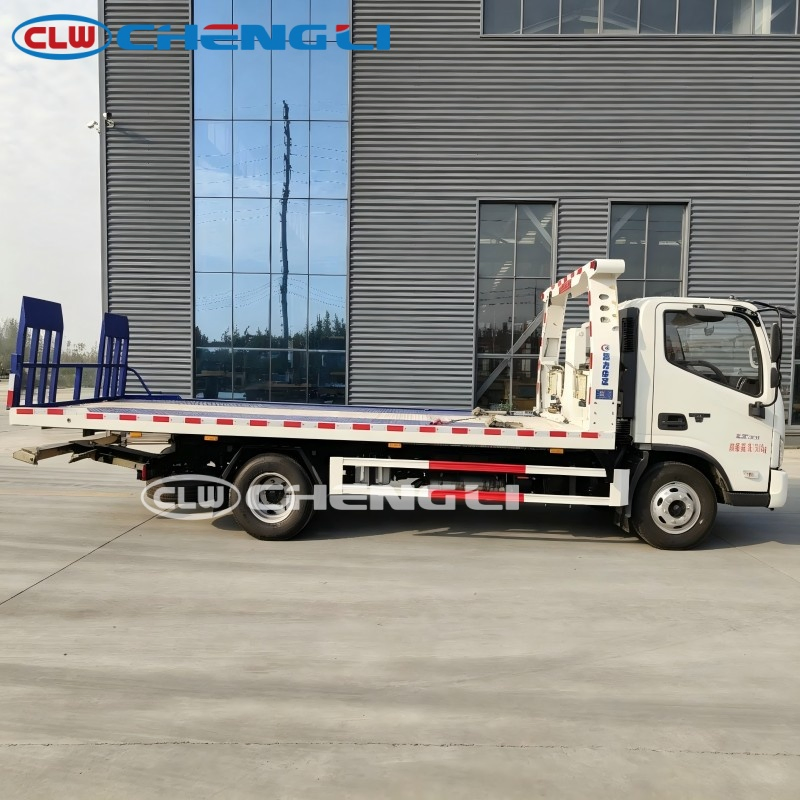
On a roadside recovery truck (wrecker), pricing scales by flatbed slide-bed capacity (3 to 8 tonnes on 4x2 chassis) versus heavy-duty rotator or under-lift integrated wreckers (20 to 50 tonnes on 6x4/8x4 chassis). Similarly, road-surfacing contractors adding an asphalt distributor truck or a field-service mobile workshop truck pay primarily for specialised heating, computerised spray-bar control, or onboard generator, compressor, and welding fit-outs. For fleet-mix planning across these categories, see our construction and utility truck fleet buying guide.
Utility / Construction Vehicle | Primary Cost Driver | Chassis Share | Common Quotation Omission |
|---|---|---|---|
Truck mounted crane (3.2–16 t) | Crane lifting moment & boom style | 45% – 55% | Rear hydraulic outriggers, hydraulic oil cooler, steel deck thickness |
6x4 / 8x4 tipper truck | Axle rating, engine hp & wear steel | 65% – 75% | HYVA vs domestic hoist, tailgate lock type, tarpaulin cover |
Aerial work platform (14–28 m) | Working height & live-line insulation | 35% – 48% | Basket load limiter, emergency descent pump, insulated certification |
Recovery wrecker (flatbed / heavy) | Winch pull rating & under-lift tonnage | 45% – 60% | Auxiliary wheel-dolly set, heavy towing forks, hydraulic side-shift |
Chassis Brand Matching and Off-Road Terrain Upgrades
Matching the chassis to ground conditions prevents early drivetrain failure. For 6x4 and 8x4 tippers and 10–16 tonne cranes operating on unsealed quarry or mine access roads, HOWO and Shacman heavy axles (16-tonne hub-reduction rear axles, 9.5-tonne front axle, heavy multi-leaf springs) offer the lowest cost per tonne-kilometre. For 3.2 to 8 tonne utility cranes, bucket trucks, and urban flatbeds, Dongfeng special trucks, Isuzu special trucks, and Foton special trucks give better cab ergonomics and tighter turning circles.
When projects operate in deep mud, desert sand, or mountainous logging and oilfield corridors across Central Asia or remote Africa, stepping up to a 4x4 or 6x6 off-road truck chassis with transfer case, differential locks, and single wide-base off-road tyres adds roughly 25% to 45% over a comparable 4x2 or 6x4 highway chassis.
Freight Methods, Spare Kits and Factory Acceptance Checks
Heavy construction trucks carry high ocean-freight footprints, so packaging choices directly move landed cost. Standard 6x4 tippers and crane trucks ship smoothly via Ro-Ro or bulk-cargo deck vessels; for markets without regular Ro-Ro calls, removing the dump box or folding the crane boom onto a flat-rack can lower freight—detailed in our Ro-Ro vs flat-rack vs container shipping guide. Always confirm whether quotes are EXW, FOB, or CIF using our FOB vs CFR vs CIF guide.
Before balance payment, verify load-testing of the crane at rated radius, full tip-cycle testing of the dump hoist, and subframe weld inspection under factory quality control. Bundling a 2% to 4% wear-parts kit—hydraulic oil filters, winch wire rope, outrigger seals, kingpin kits, and air-brake valves—through our warranty and spare parts desk keeps remote sites running without air-freight emergencies.
Common Questions About Crane and Tipper Truck Pricing
Is it cheaper to buy a crane and cargo truck separately and mount locally?
Rarely. Factory mounting integrates the reinforced double-layer subframe, matched PTO gear ratio, hydraulic tank sizing, and stability calculation in one line, whereas local retrofitting often leads to chassis cracking or under-sized hydraulic flow.
How much does adding rear hydraulic outriggers cost on a crane truck?
Rear outriggers typically add only 2% to 4% to the complete vehicle price on 6.3-tonne and larger cranes, yet they dramatically improve lateral stability and protect rear leaf springs during side lifts.
Should a quarry tipper use a front telescopic hoist or a mid-mounted scissor hoist?
For 6x4 and 8x4 heavy tippers (16 m³ and above), a front telescopic cylinder (such as HYVA) is strongly recommended: it offers better stability, simpler maintenance, and lower structural stress than mid-mounted cylinders, which are best kept for smaller 4x2 tippers.
What information do I need to get an accurate crane or tipper quote?
Provide your maximum lift weight and working radius (for cranes) or target cubic capacity and material density (for tippers), plus LHD/RHD steering, local emission requirement, terrain conditions, and destination port.
Equipping a civil engineering, utility, or mining fleet? Browse our complete special truck catalogue, compare cost structures across our price guides, or send your project specs via get a quote or contact our export engineers for an itemised factory quotation.
Discuss your truck requirement
Share your working task and destination with the CLW team.
Build Your Enquiry