
Construction contractors and utility operators rarely lose money because a truck was too expensive to buy—they lose money when the wrong lifting boom, dump body or axle layout sits idle waiting for repairs. A truck mounted crane saves renting a separate mobile crane and cargo lorry on every site drop; a reinforced tipper truck keeps sand, rock and quarry spoil moving across rough haul roads; an aerial work platform truck puts line crews safely at 14 to 36 metres; and dedicated road and roadside units—asphalt distributor trucks, recovery trucks and mobile workshop trucks—keep highway projects and heavy fleets running without subcontracting delays.
Drawing on CLW's export deliveries across Africa, Southeast Asia, the Middle East and the Caribbean/Pacific, this guide breaks down how to choose the right crane boom type, tipper drive configuration and utility support vehicles for real-world job sites.
Knuckle Boom vs. Straight Boom Truck Mounted Cranes
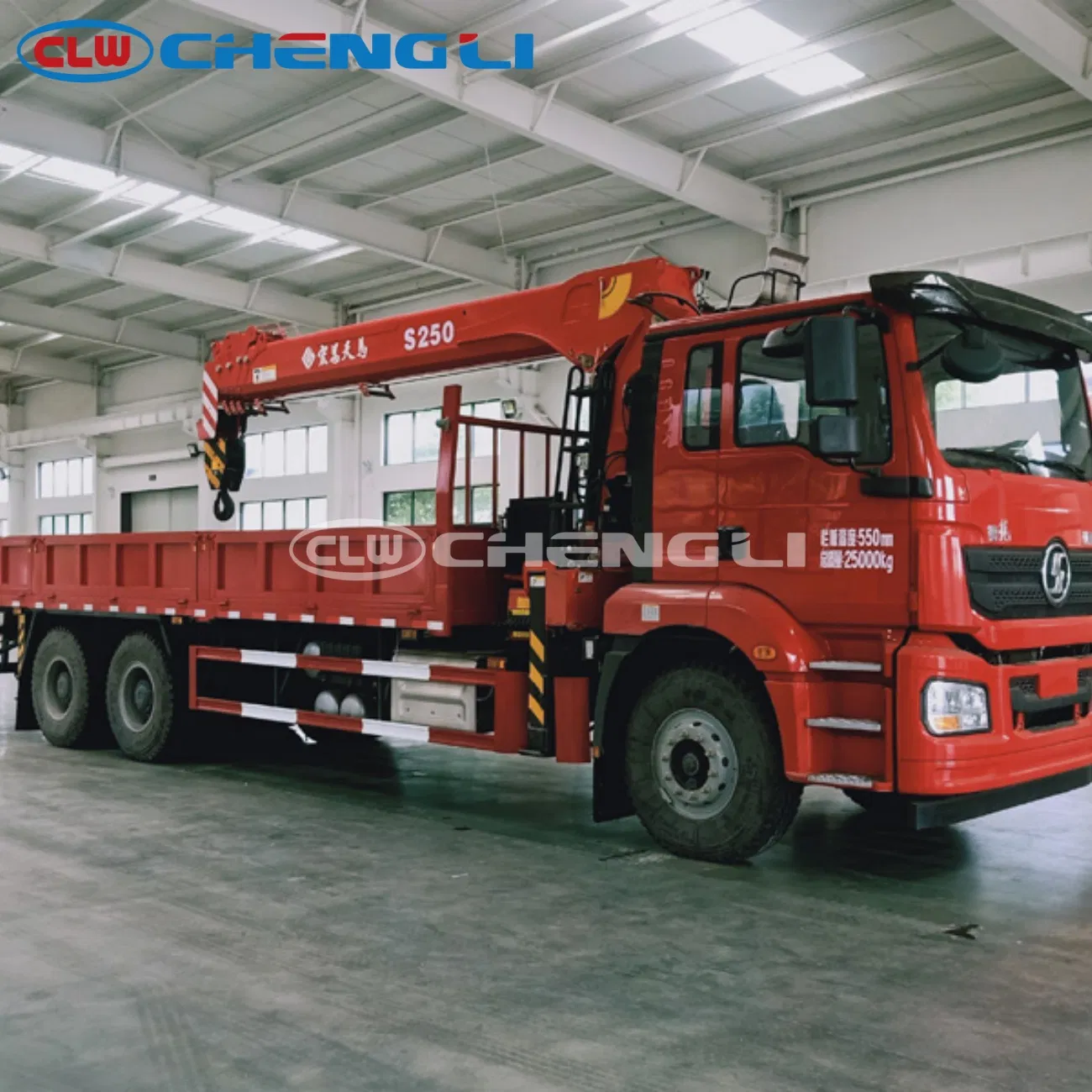
The first engineering choice on any boom truck is telescopic straight boom versus articulated knuckle boom. Both are built in CLW's construction & utility trucks workshops from 3.2 to 16+ tonnes lifting capacity, yet each behaves differently on site:
Decision Factor | Straight Boom (Telescopic) Crane | Knuckle Boom (Articulated / Folding) Crane |
|---|---|---|
Reach & Working Radius | Longer horizontal outreach and smoother vertical cable winch control | Shorter max radius, but folds cleanly over obstacles and into tight urban yards |
Cargo Bed Space | Boom stows horizontally over the cab or cargo bed | Folds compactly behind the cab, preserving almost 100% of usable flatbed length |
Precision & Attachments | Ideal for hoisting building materials, steel rebar, poles and well-drilling gear | Excels with pallet forks, brick grabs, augers and tight-clearance municipal lifting |
Maintenance & Cost | Simpler hydraulics, lower purchase cost, familiar to most site operators | Higher hydraulic complexity and upfront price, faster loading cycles in logistics |
Best-Fit Markets | Africa, South Asia, Middle East civil construction & rural infrastructure | Southeast Asia, urban utilities, port logistics & municipal fleet yards |
Always check the crane's load chart at working radius, not just maximum rated tonnage at 2 metres. A 10-tonne straight boom crane lifts 10 tonnes directly beside the outriggers, but may lift only 1.8 to 2.2 tonnes at 11 metres outreach. Equally important: match chassis gross vehicle weight to both the crane's dead weight and the payload on the cargo box, and always specify rear auxiliary outriggers on cranes rated 8 tonnes and above.
4×2 vs. 6×4 vs. 8×4 Tipper Trucks: Matching Axles to Haul Roads
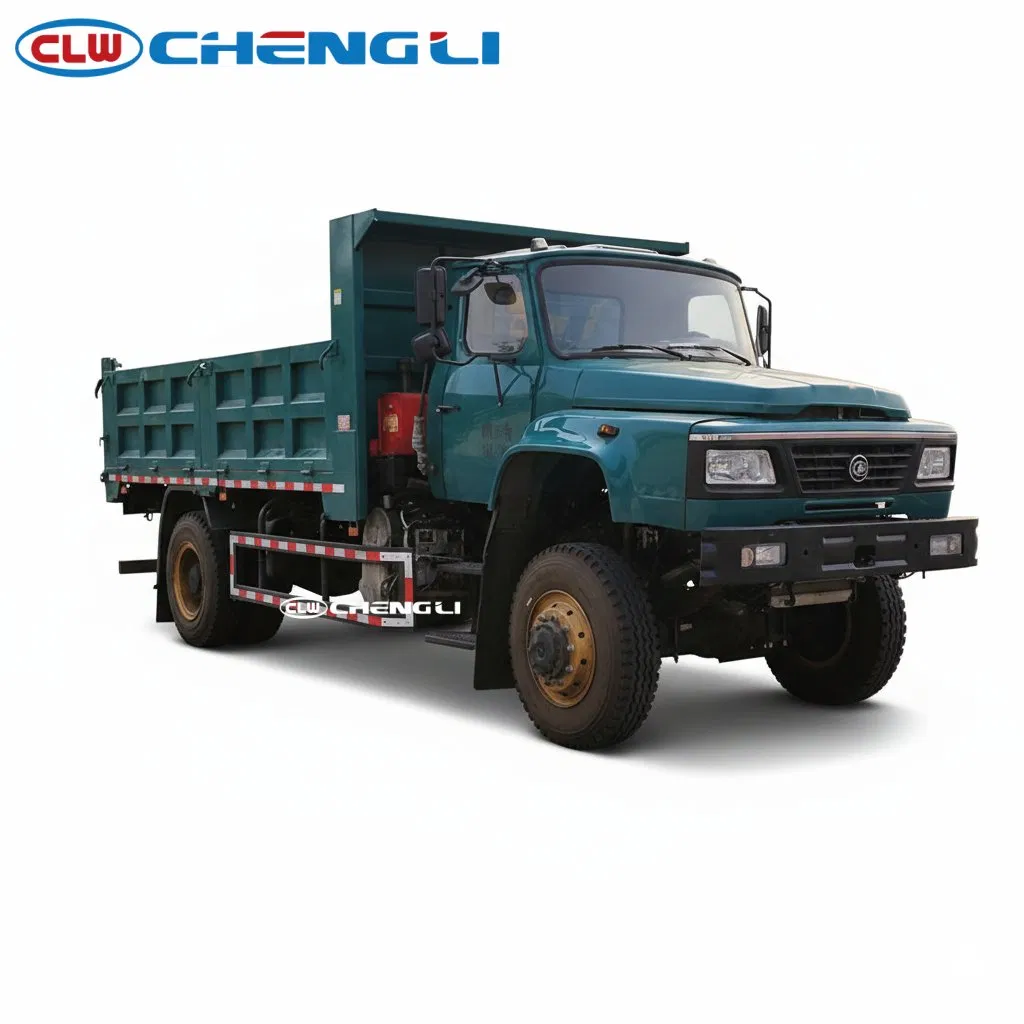
Tipper bodies suffer more structural abuse than almost any other commercial vehicle. Choosing the right drive layout and steel plate thickness prevents cracked subframes and bent tipping cylinders within the first year:
4×2 Light & Medium Tippers (5–10 m³): Built for urban renovation, bagged cement and sand delivery through narrow streets—for example, our 4×2 270 hp 9,024 L Tipper Truck.
6×4 Heavy Tippers (16–22 m³): The global workhorse for quarry haulage, road-base aggregate and earthmoving. A proven 6×4 such as the 6×4 340 hp 20,450 L Tipper Truck balances traction on unpaved slopes with straightforward two-rear-axle maintenance.
8×4 High-Volume Tippers (25–30+ tonnes): Designed for long highway aggregate runs where axle-load regulations reward four axles—avoid 8×4 trucks on tight switchback quarry roads where turning radius is restricted.
For abrasive crushed stone or mine ore, upgrade from standard Q235 steel to Hardox / NM400 wear-resistant steel (8 mm floor, 6 mm side walls) with a front-mounted Hyva-type telescopic tipping cylinder rather than an under-body scissor lift.
Aerial Work Platforms, Asphalt Distributors & Roadside Recovery
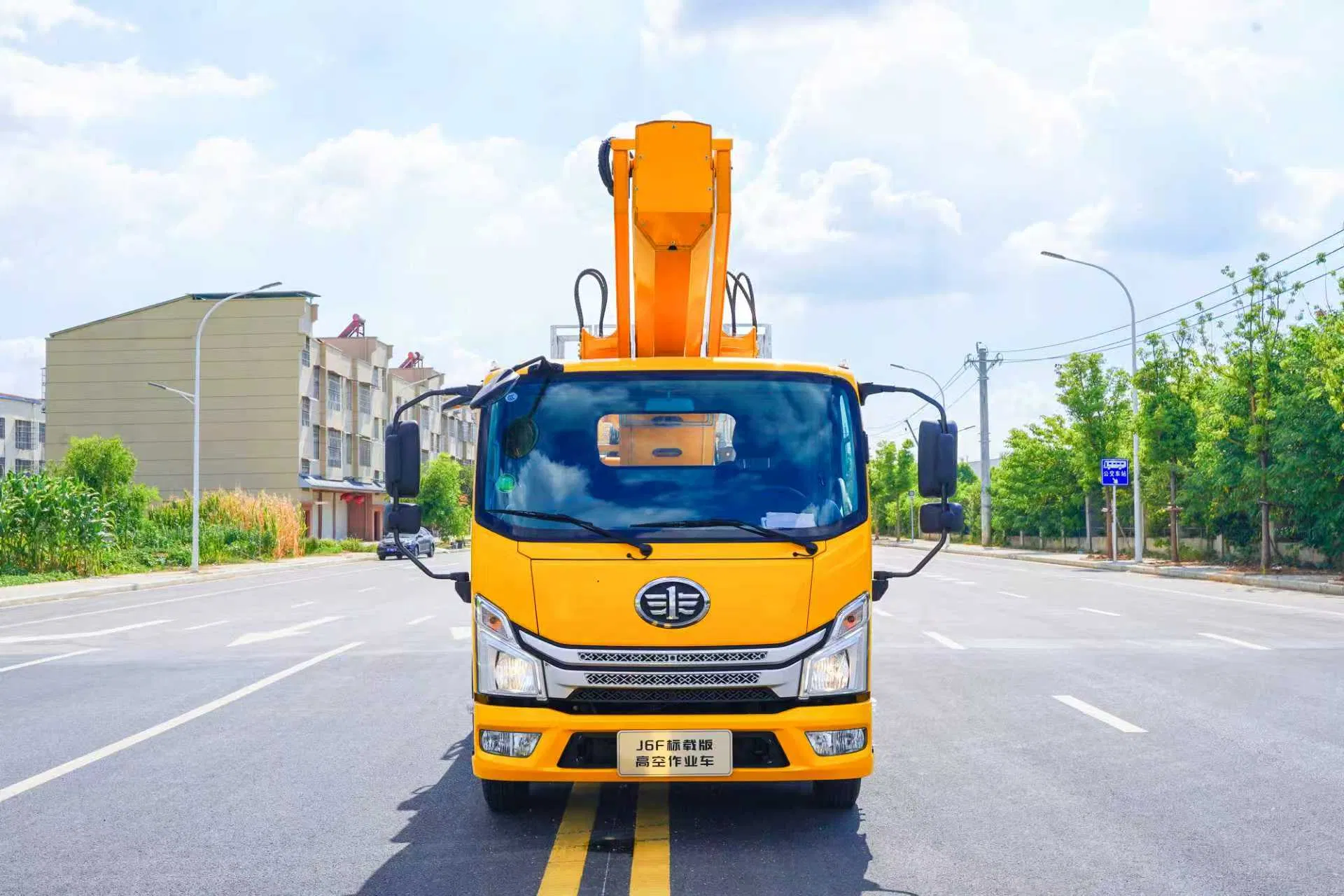
Beyond cranes and dump trucks, infrastructure and utility contracts depend on three specialist workhorses:
Aerial Work Platform Trucks (Bucket Trucks): Match platform working height (typically 14 m to 36 m) to real task clearance—14–18 m covers street lighting and telecom poles, while 22–36 m serves transmission lines, viaducts and stadium lighting. For live power-line maintenance, specify a fibreglass insulated bucket tested to 10–35 kV alongside hydraulic outrigger interlocks. Utility contractors often pair bucket trucks with a mobile power supply truck (200–500 kW truck-mounted genset) to keep substations or emergency lighting energised during grid repairs. Review full grid packages on our Power & Utilities page.
Asphalt Distributor Trucks (Bitumen Sprayers): Highway prime-coat, tack-coat and chip-seal crews need uniform spray width and reliable burner heating (thermal oil heating system) so bitumen stays at 140–170 °C without clogging nozzles. Specify computer-controlled spray-rate metering when bidding on government road tenders.
Recovery Trucks & Wreckers: Urban breakdown services favour flatbed rollback wreckers (3–5 tonnes) for passenger cars and SUVs, whereas highway concessions and heavy hauliers require integrated underlift wreckers (10–30 tonnes) or heavy rotators capable of recovering loaded 6×4 tractor units.
Site Support Vehicles That Keep Heavy Fleets Moving
Large civil works and remote mines lose thousands of dollars per hour when an excavator or haul truck breaks down far from town. Explore CLW's special & off-road vehicles and sector packages for Construction & Road Building and Mining & Quarrying:
On-Site Maintenance: A mobile workshop truck equipped with diesel generator, air compressor, welding machine, lubrication reels, crane jib and tool cabinets brings the repair bay directly to the excavator.
All-Terrain Access: Where monsoon mud, desert sand or unpaved mine tracks stop 6×4 road trucks, build cargo, workshop or tanker bodies on 4×4 & 6×6 off-road trucks.
Dust Control & Haul-Road Watering: Active quarries and road-building sites pair water tanker trucks (water bowsers) for haul-road compaction with dust suppression trucks (such as our Foton 4×2 10t Fog Cannon Truck) around crushers and stockpiles.
On-Site Refuelling & Heavy Equipment Transport: Keep excavators fuelled at the pit with a fuel bowser truck (see our Fuel Tanker & Bowser Buying Guide for dispenser specs), and move bulldozers or rollers between projects on lowbed special semi-trailers.
Choosing the Right Chassis Brand for Tough Job Sites
Chassis Platform | Best Construction & Utility Roles | Key Regional Advantage |
|---|---|---|
6×4 / 8×4 tippers, 8–16 t truck cranes, heavy wreckers | Rugged HC16/AC16 hub-reduction axles; parts stocked across Africa and Asia | |
Mining tippers, 6×6 off-road support trucks, heavy cranes | Weichai + Fast gearbox + Hande axle powertrain built for high-torque steep climbs | |
3.2–8 t boom trucks, aerial platforms, flatbed recovery trucks | High fuel economy and smooth urban handling across Southeast Asia & Caribbean & Pacific | |
Asphalt distributors, medium tippers, 5–12 t cranes, workshops | Broad wheelbase range, Cummins/Yuchai engine options, strong value-to-payload ratio |
Every CLW construction and utility chassis can be tailored via our Customization & OEM team—LHD or RHD steering, Euro II to Euro VI emissions, tropicalised cooling, heavy-duty multi-leaf springs and reinforced chassis subframes—backed by cab-stowed wearing-parts kits through Warranty & Spare Parts. If your company also bids on city sanitation contracts, read our companion guide on selecting garbage compactors, skip loaders and hook lift trucks.
Common Questions from Construction & Utility Buyers
Do I need a reinforced double-layer chassis frame for a truck mounted crane?
Yes. Any crane rated 5 tonnes or above should be mounted on a reinforced double-layer chassis frame (typically 280–300 mm beam height with 8+5 mm or 8+8 mm double steel) plus a full-length subframe to prevent frame cracking during side lifting.
What tipping cylinder should I choose for a 6×4 mining tipper?
Always specify a front-mounted multi-stage telescopic hydraulic cylinder (such as Hyva or equivalent heavy-duty brand) rather than an under-body twin-cylinder lift. Front lifting delivers greater stability on uneven quarry ground and higher lifting force for wet clay or rock.
Can CLW supply insulated aerial work platform trucks for live power lines?
Yes. We build insulated telescopic and articulated bucket trucks with fibreglass work baskets, insulated boom sections and hydraulic levelling systems rated for utility line maintenance.
How are heavy truck cranes and tippers shipped overseas?
Most 4×2 and 6×4 cranes, bucket trucks and tippers ship economically by RoRo vessel or bulk carrier. Where port RoRo sailings are limited, we also arrange Flat Rack shipping or SKD containerised packing for multi-unit orders—see Shipping & Delivery for vessel comparisons.
What spare parts should I order with a new construction fleet?
Order a 1-year consumables kit with the trucks: hydraulic hoses and seal kits, PTO oil seals, filter sets (fuel, oil, air, hydraulic), brake linings, clutch plates and crane wire ropes or outrigger pads. Packing them inside the cab or cargo box saves air-freight costs later.
Planning a civil works, mining or utility fleet order? Browse all 35+ models in the CLW Products Catalogue, explore technical comparisons in Buying Guides, or request a factory-direct quote (or reach our team via Contact CLW) with your lifting tonnage, dump volume, LHD/RHD requirement and destination port.
Discuss your truck requirement
Share your working task and destination with the CLW team.
Build Your Enquiry