
Choosing how a special purpose truck crosses the ocean affects far more than the freight invoice. The shipping method dictates whether the vehicle arrives ready to drive off the quay, whether hydraulic booms or mirrors must be unbolted before loading, how much salt spray hits the cab during a 35-day voyage, and how quickly your clearing agent can pull the unit out of the terminal.
From our export dispatch desk in Suizhou, we ship water tankers, rear-loading garbage compactors, truck-mounted cranes, ambulances, and semi-trailers out of Shanghai, Tianjin, Qingdao, and Lianyungang every week. Four ocean transport modes cover commercial vehicle exports: Roll-on/Roll-off (RoRo), Flat Rack containers, 40-foot High Cube (40HQ) dry containers, and break-bulk vessels. Each mode has clear dimensional and commercial boundaries—picking the wrong one adds thousands of dollars in avoidable port crane charges or dismantling labour.
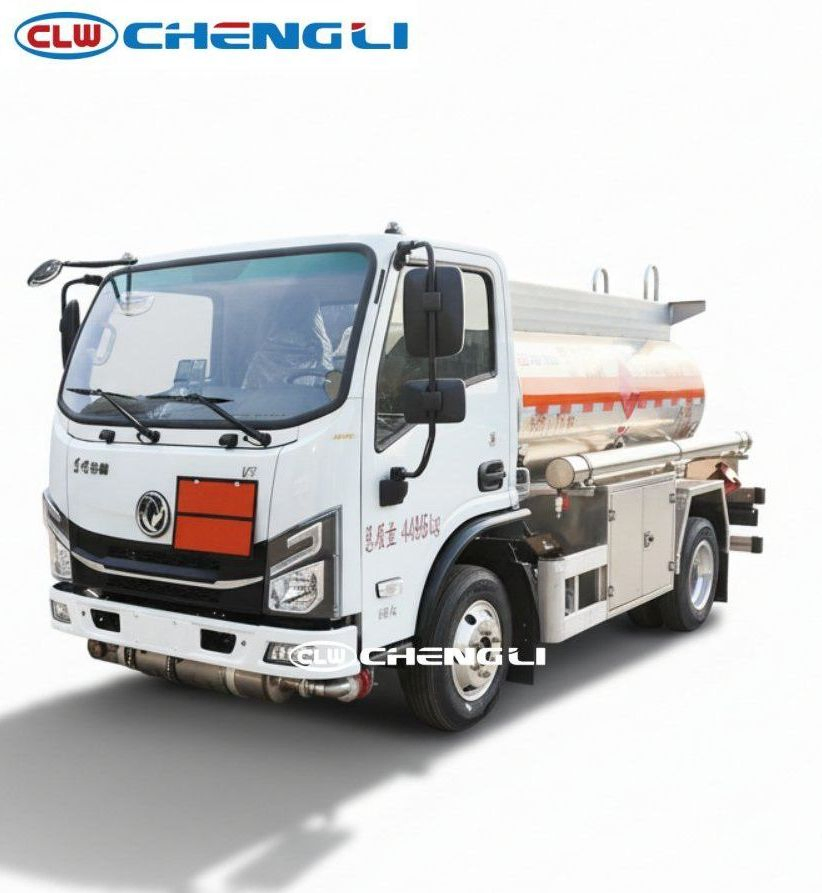
RoRo Shipping: The Workhorse for Self-Propelled Special Trucks
Roll-on/Roll-off vessels are purpose-built floating multi-storey vehicle decks. A port stevedore drives the finished vehicle up the stern ramp, parks it on an enclosed, weather-protected deck, and lashes the axles with heavy webbing straps. For complete, self-propelled 4x2, 6x4, and 8x4 trucks—such as a fuel tanker truck, sewage suction truck, or Dongfeng water bowser—RoRo is usually the cleanest and most economical option whenever direct sailings serve your port.
RoRo freight is priced per cubic metre (CBM), calculated from extreme length × width × height. Because every centimetre counts, our yard team folds side mirrors, stows roof beacons inside the cab, and checks tyre pressure before port measurement. Before sailing, we apply anti-rust wax over exposed chrome hydraulic rods, disconnect the battery isolator after loading, and leave roughly 10 to 15 litres of diesel in the tank.
The main limitation of RoRo is port coverage. Major hubs such as Jebel Ali, Mombasa, Dar es Salaam, Lagos (Tin Can / Apapa), Port Klang, and Manila enjoy regular RoRo calls from Shanghai and Tianjin. Smaller island ports in the Caribbean and Pacific or secondary ports in South Asia often lack frequent RoRo sailings, forcing a shift to containerised or break-bulk shipping.
40HQ Dry Containers: Best for Compact Vehicles, Vans, and SKD Kits
A standard 40HQ container measures roughly 12.03 m × 2.35 m × 2.69 m internally, with a door opening of 2.34 m × 2.58 m. Full-size 6x4 trucks are too wide and tall to enter intact, but compact vehicles fit comfortably—including patient transport ambulances, light refrigerated trucks on Isuzu or JMC chassis, and compact road sweeper trucks.
Global port reach: Container liners call almost every commercial port weekly, making 40HQ ideal when RoRo sailings are unavailable.
Semi-Knocked Down (SKD) loading: For markets with steep import duties on completely built-up (CBU) vehicles, we can partially dismantle a medium-duty tipper truck, skip loader truck, or Foton dust suppression truck. Removing the cab, tyres, or body lets one medium truck plus spare parts fit inside a single 40HQ, provided your workshop has a crane and technicians to reassemble and bleed hydraulic lines.
Shipping Method | Typical Vehicle Fit | Weather Protection | Port Handling Risk | Best Route Profile |
|---|---|---|---|---|
RoRo Vessel | Complete 4x2, 6x4, 8x4 trucks, fire engines | High (enclosed deck) | Low (driven on/off) | Major ports: Lagos, Mombasa, Dar es Salaam, Jebel Ali, Manila |
40HQ Container | Ambulances, light box trucks, SKD/CKD kits | Very high (sealed box) | Low (gantry crane) | Secondary ports, weekly liner schedules, high-theft lanes |
40FR Flat Rack | Out-of-gauge trucks, aerial platforms, tall cranes | Low (tarpaulin wrap) | Moderate (crane & lashing) | Container-only ports with no RoRo service |
Break-Bulk Vessel | Fleet orders (5+ trucks), LPG tankers, trailers | Medium (under-deck) / Low (on-deck) | Moderate (heavy slings) | Large project tenders, Africa & Middle East ports |
Flat Rack Containers: Solving Out-of-Gauge Cargo on Container Lanes
When a truck exceeds 2.34 m in width or 2.58 m in height and the destination port has no RoRo service, a 40-foot Flat Rack (40FR) container is the standard bridge solution. Its reinforced steel floor and collapsible end walls allow over-height machinery—such as a HOWO rear-loader compactor, an asphalt distributor, or a hook lift truck—to ride on regular container ships.
Shipping lines apply Out-of-Gauge (OOG) surcharges whenever cargo overhangs the standard container slot. Because Flat Rack cargo travels exposed to sea air unless booked under-deck at a premium, we wrap electrical control boxes and cab windscreens in UV-stabilised tarpaulin and apply rust-inhibitor wax before lashing with chains and turnbuckles. At destination, your clearing agent must arrange a mobile crane or reach-stacker if the terminal lacks a drive-off ramp.
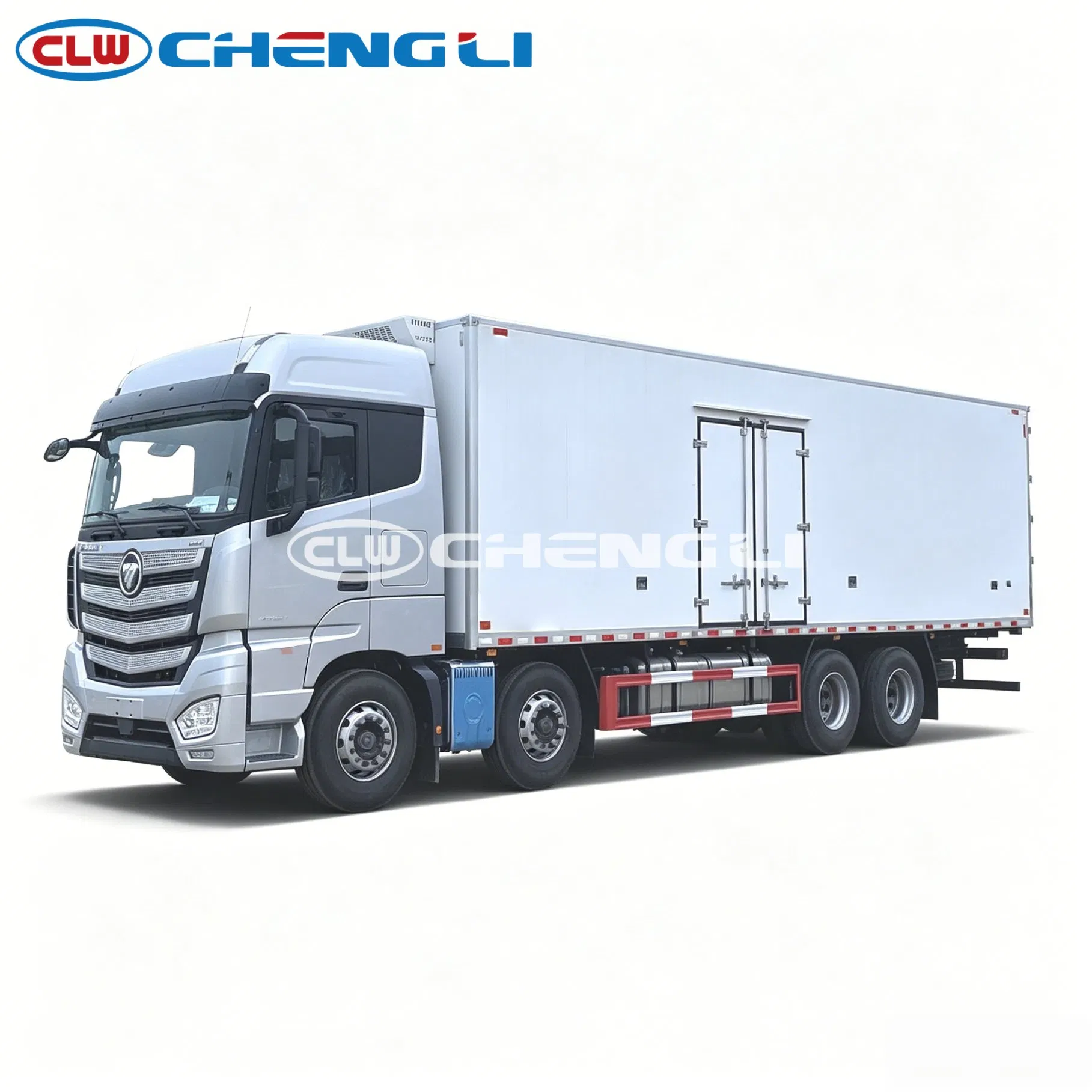
Break-Bulk Vessels: Fleet Shipments and Oversized Tankers
Break-bulk vessels carry unpackaged heavy equipment using ship cranes (30 to 80 tonnes safe working load) to lift vehicles by spreader beams and nylon slings into the cargo hold or onto the weather deck. This mode is widely used for multi-unit government orders, 6x4 tipper fleets, and fuel bowsers bound for West and East Africa or Southeast Asia.
Always clarify whether your break-bulk quotation covers under-deck or on-deck stowage. On-deck freight is cheaper per CBM, but three weeks of Indian Ocean spray can pit chrome cylinder rods and corrode electrical connectors. For sensitive bodies like a mobile clinic truck or foam fire truck, insist on under-deck stowage—or choose RoRo or 40HQ instead. Also check whether the booking uses Liner Terms (FLT—lifting included) or Free Out (FO), where destination crane hire is billed separately.
Example CLW Vehicle | Approx. Dimensions (L × W × H) | Volume (CBM) | Primary Recommended Mode |
|---|---|---|---|
5.99 m × 2.05 m × 2.65 m | ~32.5 CBM | 40HQ Container or RoRo | |
4x2 Water Tanker (10,000 L) | 7.40 m × 2.48 m × 2.95 m | ~54.1 CBM | RoRo (primary) or Break-Bulk under-deck |
9.80 m × 2.50 m × 3.45 m | ~84.5 CBM | RoRo (primary) or Break-Bulk under-deck | |
9.60 m × 2.52 m × 3.25 m | ~78.6 CBM | RoRo or 40FR Flat Rack (container-only ports) | |
40 m³ Semi-Trailer + Tractor | 12.50 m × 2.55 m × 3.65 m | ~116.3 CBM | Break-Bulk (stacked trailers) or RoRo |
Practical Preparation Before Port Gate-In
Physical preparation at our Suizhou plant determines the condition in which the truck reaches your yard. For every unit on a HOWO, Shacman, or Dongfeng chassis, our dispatch team completes a standard sea-transit routine: waxing paintwork and hydraulic rams, draining water tanks and pumps completely (essential in winter sailings out of Tianjin or Qingdao), sealing toolboxes with numbered tamper tags, and packing manuals and spare keys in a documented handover pouch. If you are also ordering a one-year spare-parts kit, coordinate vessel ETAs if bulky items ship in a separate container.
Common Questions About Shipping Special Purpose Trucks
Which Chinese export port is best for CLW trucks?
Our Suizhou base connects directly to four major ports. Shanghai is our primary hub for RoRo and container sailings to Africa, the Middle East, and Southeast Asia. Tianjin and Qingdao serve frequent break-bulk and RoRo sailings to Africa and Central Asia, while Lianyungang handles heavy construction and mining trucks.
Can I pack spare parts or loose tyres inside a truck shipped by RoRo?
Most RoRo carriers prohibit loose cargo inside the cab due to pilferage and customs rules. Standard factory tools and spare filters packed inside a locked, sealed chassis toolbox are usually accepted if declared on the Packing List; extra tyres should ship separately.
Is SKD container shipping always cheaper than RoRo?
Not always. Add factory dismantling labour, crating, destination cranes, and local reassembly costs before comparing rates. SKD makes strongest financial sense when your country imposes a wide duty gap between CBU trucks and knocked-down kits, or when RoRo space is unavailable.
How do I protect a truck from rust on a break-bulk or Flat Rack voyage?
Specify under-deck stowage on break-bulk vessels wherever possible. If on-deck or Flat Rack transport is unavoidable, request full anti-rust wax coating on chassis rails and chrome rods, waterproof wrapping on control cabinets, and desiccants inside the cab.
Need a real freight comparison for your port? Check the dimensions of your target model in our truck catalogue, browse more logistics articles in our Import & Shipping hub, or read how we coordinate port dispatch on our shipping and delivery page. Send your destination port and truck model via our quotation form or contact our export team for side-by-side RoRo, Flat Rack, and container rates.
Discuss your truck requirement
Share your working task and destination with the CLW team.
Build Your Enquiry