
Fuel and hazmat tankers sit in a stricter pricing bracket than water or dry-cargo trucks because safety regulation, pressure-vessel engineering, and metering accuracy directly govern what can legally run on public roads. When fleet buyers compare a standard carbon steel fuel tanker truck against a 5083 aluminium alloy unit, a mobile fuel bowser truck, or a pressurised LPG tanker truck, the upper-body specification often accounts for half the total investment.
Understanding how tank metallurgy, compartment count, bottom-loading API valves, and dispensing hardware move factory pricing helps oil, gas and fuel distribution operators balance upfront capital against legal payload, corrosion resistance, and resale value.
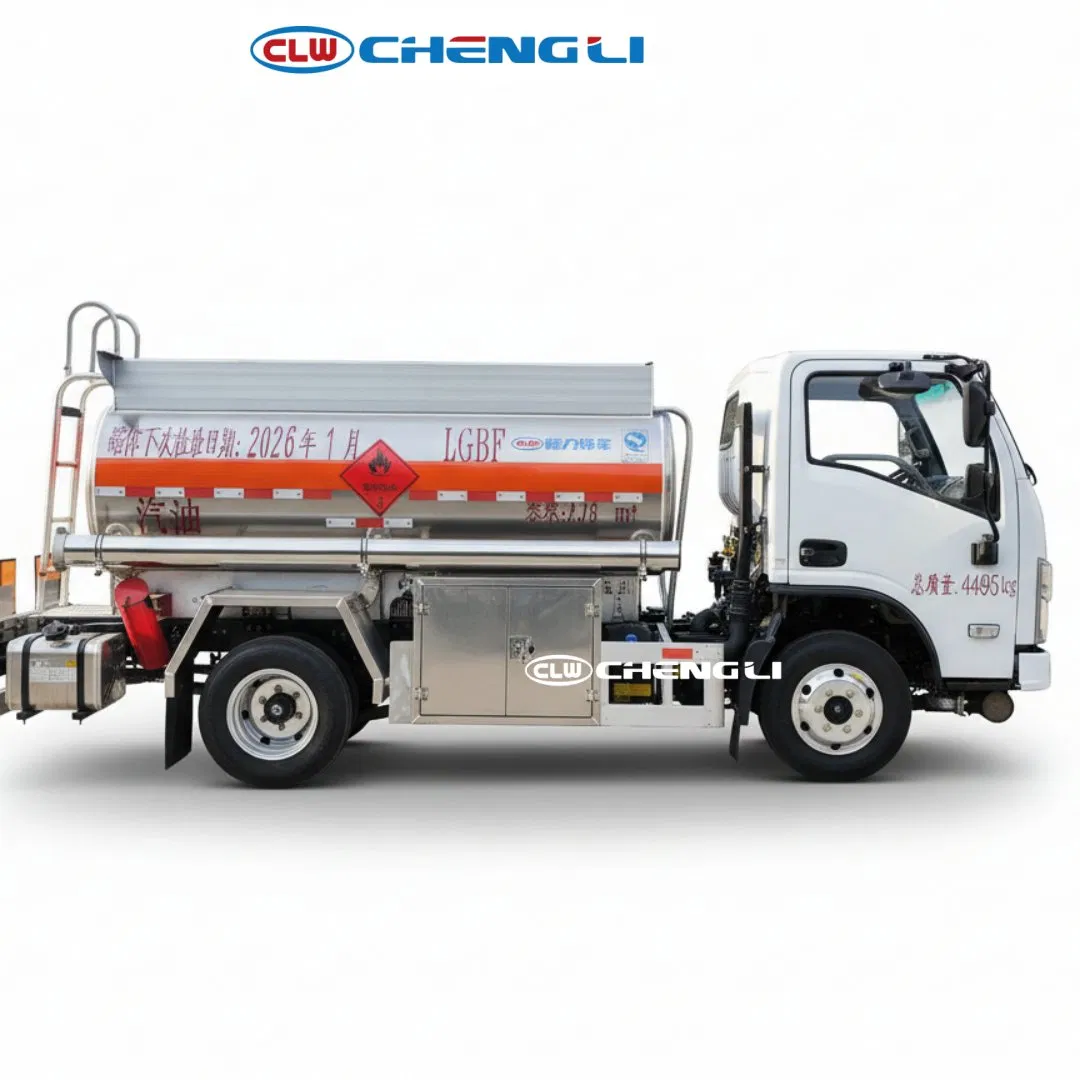
Carbon Steel vs 5083 Aluminium Alloy: Cost and Payload Trade-Off
For diesel and petrol transport across 5,000 L to 25,000 L rigid tankers, buyers face a core material decision: Q235B carbon steel or 5083-H111 marine-grade aluminium alloy. Carbon steel remains the entry-level benchmark for regional depots, mining contractors, and fleet refuelling bowsers—such as our Dongfeng 10–12 m³ fuel bowser truck—because plate cost is lower and any local welding shop can repair minor accident damage.
Switching to 5083 aluminium alloy typically raises the tank fabrication cost by 40% to 65%, which translates into roughly a 15% to 25% premium on the complete truck price. In return, an aluminium tank cuts tare weight by 1,200 to 2,800 kg depending on size, allowing 8% to 15% more legal fuel payload per trip under strict axle-load enforcement. Aluminium also avoids internal rust contamination in aviation jet fuel or ultra-low-sulphur diesel and retains stronger scrap and resale value after eight to ten years.
Comparison Factor | Q235B Carbon Steel Tank | 5083 Aluminium Alloy Tank | 304/316L Stainless / Lined Chemical Tank |
|---|---|---|---|
Complete truck relative price | 1.0x baseline | 1.15x – 1.25x | 1.35x – 1.75x |
Tare weight & legal payload | Heavier; lower legal payload | Lightest; +8% to +15% payload | Heavy; engineered for corrosive density |
Typical media | Diesel, petrol, heavy fuel oil | Petrol, ULSD, Jet A-1 fuel | Acids, alkalis, solvents, industrial chemicals |
Field repair & upkeep | Easy local welding; needs internal care | Requires TIG/MIG aluminium welder | Specialised welding or PE rotomould lining |
Fuel Tanker vs Mobile Refueller vs LPG and Chemical Tankers
Not every liquid-fuel vehicle carries the same equipment package. A bulk transport fuel tanker built purely to transfer product from a refinery depot to service stations needs a compartmentalised tank, bottom emergency valves, and gravity discharge—keeping upper-body cost lean. A mobile fuel bowser refueller for construction sites, quarries, or agricultural estates adds a PTO-driven gear or vane pump, an explosion-proof flowmeter or tax-controlled fuel dispenser with receipt printer, a 15 m spring-rewind hose reel, and an automatic shut-off nozzle. That dispensing package typically adds 6% to 14% to the truck price.
Stepping into pressurised gas or hazardous chemicals changes the cost equation altogether. An LPG bobtail (commonly 5 m³ to 25 m³) is built from Q345R or Q370R pressure-vessel steel under strict non-destructive X-ray weld testing, hydro-testing, and relief-valve certification, plus a Corken or Blackmer LPG pump and mass flowmeter. That pressure-vessel certification puts an LPG bobtail roughly 35% to 60% above a carbon-steel diesel tanker of equal chassis class. Likewise, a chemical tanker truck—using either 316L stainless steel or a carbon-steel shell lined with 16–20 mm rotomoulded linear low-density polyethylene (LLDPE)—carries a substantial metallurgy and valve premium. For a full operational breakdown, see our fuel tanker vs fuel bowser vs LPG tanker guide.
Safety Valves, Compartments and Metering Packages
Inside any fuel tanker quote, small-looking line items add up quickly when multiplied across multiple compartments. Splitting a 20,000 L tank into four independent 5,000 L compartments rather than a single compartment requires three extra full-welded bulkheads, four European-standard aluminium manholes, four pneumatic subsea emergency shut-off valves, and four separate discharge manifolds—raising upper-body cost by 10% to 18%.
Terminal loading rules in the Middle East, Southeast Asia, and major African oil depots increasingly mandate full ADR-style bottom loading: API bottom-loading adaptors, optical overfill prevention probes, vapour recovery couplers, and interlock bars that lock the truck brakes while hoses are connected. Adding a full four-compartment API bottom-loading and vapour-recovery kit typically adds 8% to 15% to the complete vehicle price, but it is non-negotiable if the depot refuses top-loading trucks.
Tanker Option Package | Price Impact on Complete Truck | Compliance / Operational Role | Quotation Check Item |
|---|---|---|---|
Fuel dispenser + 15 m reel + auto nozzle | +6% to +12% | Direct refuelling of excavators, trucks, generators | Confirm 12V/24V explosion-proof rating and litre calibration |
Multi-compartment (3 to 5 bays) | +8% to +16% | Carry diesel and petrol grades on one delivery run | Check separate piping vs manifold with subsea valves |
API bottom loading + vapour recovery | +8% to +15% | Mandatory at modern refinery and port loading racks | Verify optical socket standard (5-pin vs 10-pin) |
Digital flowmeter (LC / Chinese positive-displacement) | +4% to +14% | Custody-transfer billing accuracy for fuel distributors | Clarify domestic vs imported meter brand and printer |
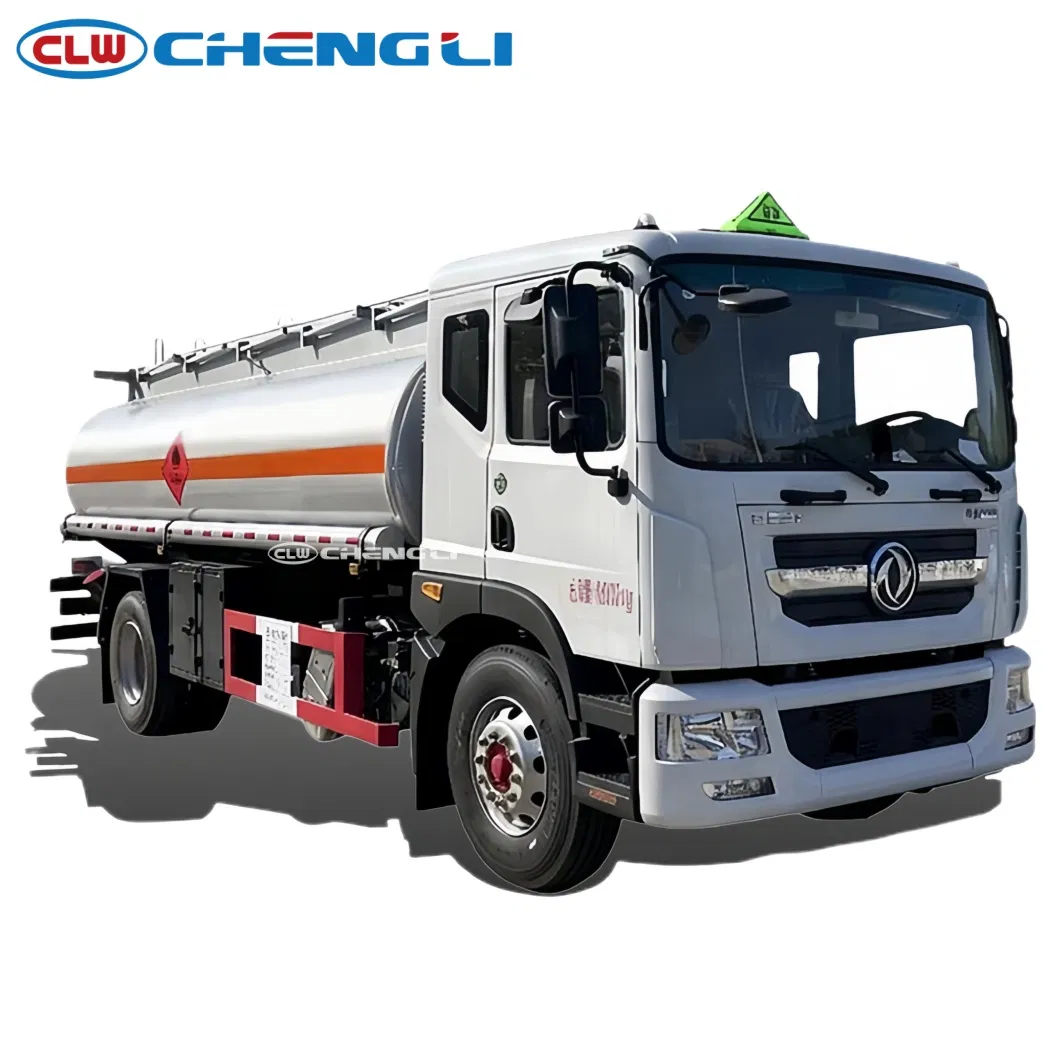
Dangerous-Goods Chassis Specifications and Semi-Trailer Alternatives
Hazmat tankers cannot legally mount on a standard dry-cargo chassis in most jurisdictions. A proper dangerous-goods chassis from our chassis lineup adds front disc brakes, an exhaust pipe routed to the front bumper with a spark arrestor, an electronic speed limiter (typically 80 km/h), ABS, a battery master cut-off switch, and anti-static earthing straps. Across 10,000 L to 25,000 L builds, Dongfeng special trucks, Sinotruk HOWO special trucks, and Shacman special trucks are the most cost-effective hazardous-goods platforms, while Isuzu special trucks and FAW special trucks serve compact urban refuellers.
Once single-trip volume exceeds 25,000 L to 30,000 L, a 6x4 tractor head pulling a 35,000 L to 50,000 L fuel tanker semi-trailer delivers a far lower capital cost per litre transported than a rigid 8x4 truck, while also allowing one tractor to rotate between trailers.
Inspection Certificates, Shipping Rules and Export Costs
Fuel and LPG tankers require tighter documentation than standard trucks. Every unit must pass tank pressure testing, weld inspection, and safety-valve calibration under factory quality control, with mill test certificates and export compliance certificates prepared before shipment. For Central Asia overland delivery or ocean Ro-Ro shipment, tanks are always shipped completely dry, degassed, and purged with inert gas where required—never with residual fuel.
When comparing quotations, verify whether third-party pre-shipment inspection (SGS, BV, or Intertek), calibration charts per compartment, and spare gaskets, subsea valve diaphragms, and dispenser nozzles are included in FOB pricing. Reviewing our FOB vs CFR vs CIF guide and payment terms keeps project financing predictable from deposit to port clearance.
Common Questions About Fuel Tanker Truck Pricing
How quickly does an aluminium fuel tanker pay back its higher purchase price?
On high-utilisation depot routes where axle-load scales enforce strict weight limits, the extra 8% to 15% legal payload per trip often recovers the aluminium premium within 12 to 24 months—before counting fuel savings on empty return legs and higher resale value.
Can a single fuel bowser dispense both diesel and petrol?
Yes, if the tank is divided into two sealed compartments with dedicated piping and either dual dispensers or a properly flushed dual-inlet manifold. Dual dispensing hardware adds upfront cost, so confirm whether both fuels are genuinely needed on the same truck.
Why do LPG tanker quotes have longer lead times than diesel tankers?
LPG tanks are coded pressure vessels requiring certified Q345R steel plates, 100% radiographic weld inspection, post-weld heat treatment, and statutory pressure-vessel stamping—typically adding 15 to 25 production days compared with an atmospheric fuel tank.
What extra safety gear should be included in an export fuel tanker quote?
Ensure the quote explicitly lists two dry-powder fire extinguishers in weatherproof boxes, a retractable grounding reel, reflective ADR hazard placards, folding safety handrails on the top walkway, and anti-slip catwalk grating.
Budgeting for a fuel distribution fleet, mining refueller, or LPG bobtail? Browse our tanker trucks category and full product catalogue, explore more breakdowns in our price guides, or request a tailored factory quote via get a quote or contact our export engineers.
Discuss your truck requirement
Share your working task and destination with the CLW team.
Build Your Enquiry