
Buying a tanker truck on tank volume alone is a common reason fleet budgets go sideways. A fuel tanker truck built for depot-to-station bulk haulage has completely different piping, baffling and metering from a fuel bowser truck that refuels excavators inside a quarry. Move into pressurised gas or corrosive acids, and tank steel, weld testing and valve codes change altogether: LPG tanker trucks require ASME or GB150 pressure vessels, chemical tanker trucks demand cargo-matched linings, and potable water tankers must use food-grade 304 or 316L stainless steel.
At CLW, our export engineering desk reviews hundreds of liquid and gas fleet tenders every year across Africa, South Asia, the Middle East and Central Asia. Here is how to match tank design, material, chassis and safety fittings to your actual cargo and routes.
Comparing the Five Core Tanker Configurations
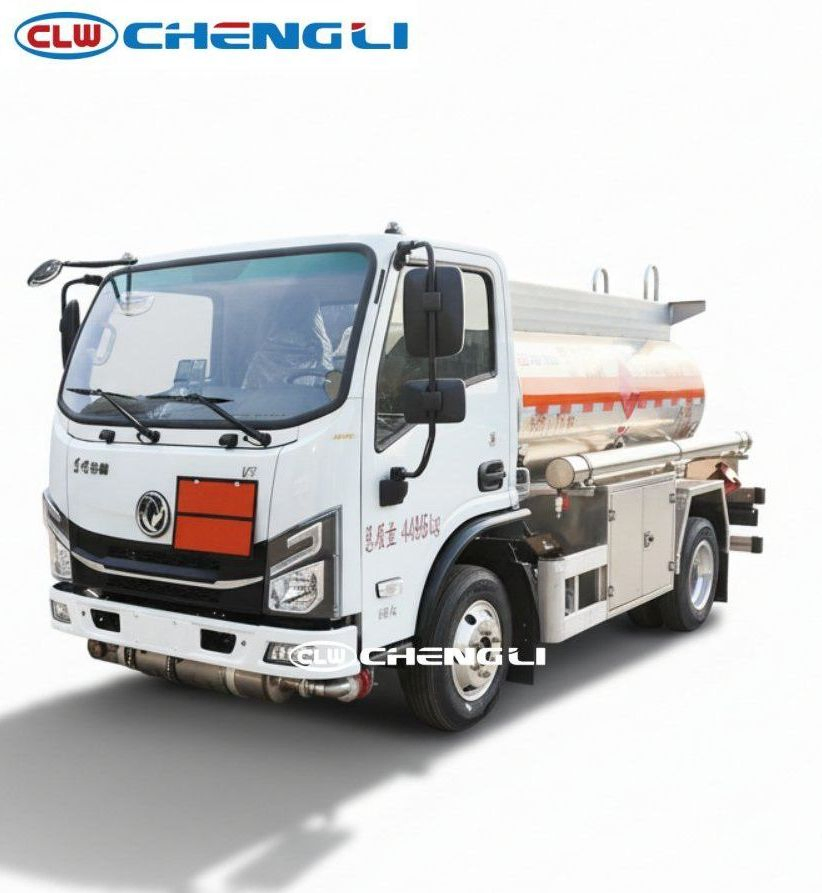
Every model in CLW's tanker trucks line is engineered around cargo density, vapour pressure and discharge method rather than shell size alone:
Tanker Type | Typical Capacity | Tank Shell Material | Key Discharge & Safety System | Primary Application |
|---|---|---|---|---|
Fuel Tanker Truck | 5,000 – 30,000 L | Q235B carbon steel (5 mm) or 5083 aluminium alloy | Multi-compartment baffles, API bottom loading, vapour recovery, emergency shut-off valve | Depot-to-filling-station bulk diesel & petrol transport |
Fuel Bowser (Mobile Refueller) | 5,000 – 20,000 L | Q235B carbon steel or aluminium alloy | Calibrated digital dispenser, flow meter, 15 m auto-rewind hose reel & refuelling nozzle | On-site refuelling for mines, quarries, farms, generators & municipal fleets |
LPG Tanker / Bobtail | 5 – 35 m³ (2.5 – 17 tonnes) | Q345R / Q370R pressure-vessel steel (10–14 mm) | Corken/Blackmer LPG pump, Coriolis or turbine meter, dual safety relief valves, emergency cut-off | Cylinder-filling plants, bulk domestic & hotel LPG distribution |
Chemical Liquid Tanker | 5,000 – 25,000 L | 316L stainless steel, steel-lined PE (16–20 mm) or FRP | Acid-resistant chemical pump, PTFE-lined bottom valve, overflow containment | Hydrochloric acid, sulphuric acid, caustic soda, industrial solvents |
Potable Water Tanker | 5,000 – 15,000 L | Food-grade 304 / 316L stainless steel (polished interior) | Sanitary stainless pump, food-grade hoses, sealed dust-proof manhole | Municipal drinking water supply, hotels, humanitarian relief |
Fuel Tanker vs. Fuel Bowser: Where Buyers Get Caught Out
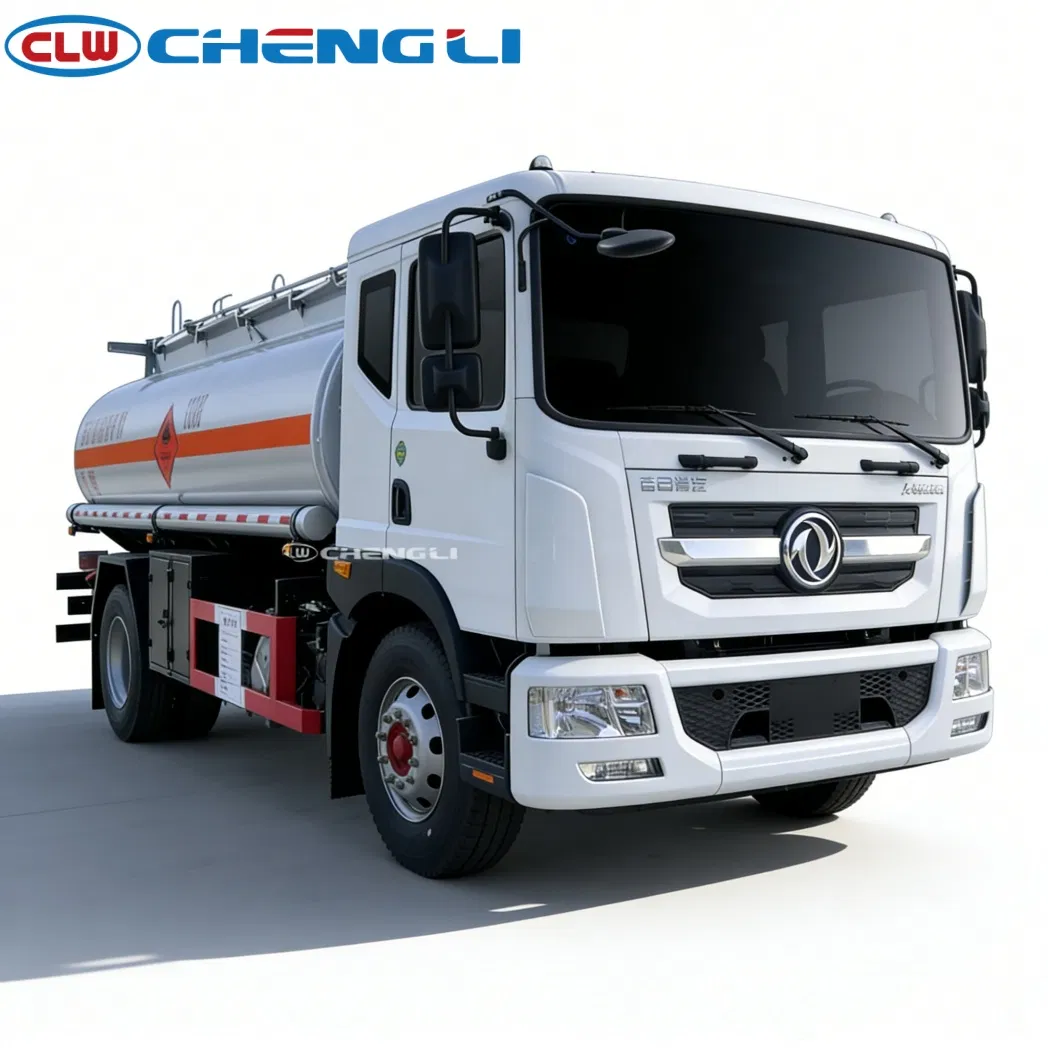
Many first-time importers ask for a "10,000-litre fuel truck" without specifying whether they are delivering bulk fuel to underground storage tanks or dispensing metered diesel directly into heavy equipment. Specifying the wrong setup adds weeks of rework after delivery.
A standard bulk fuel tanker uses a high-flow PTO-driven gear pump (typically 40–60 m³/h) and 3-inch or 4-inch API discharge valves to drop a full compartment into a station tank in minutes. Multiple compartments (2 to 5) allow one truck to carry diesel and petrol simultaneously while reducing liquid surge on hilly roads.
A mobile refueller (fuel bowser) adds a fuel dispenser cabinet—mechanical or electronic preset—with a calibrated flow meter, receipt printer and spring-rewind hose reel. Contractors running remote yards or quarries often deploy models like the Dongfeng 4×2 Heavy-Duty Fuel Bowser Truck for main haul fleets, or the more compact Dongfeng 4×2 Medium Fuel Bowser Truck for tight construction sites and generator farms. If your routes involve steep, muddy mine access roads, mounting a refuelling body on 4×4 & 6×6 off-road trucks prevents costly downtime during the rainy season.
For high-volume highway transport above 30,000 litres—such as port-to-inland depot runs—a rigid truck hits axle-load ceilings quickly. In those corridors, switching to a 40,000–60,000 litre tank built in our special semi-trailers range lowers freight cost per litre dramatically.
Carbon Steel vs. Aluminium Alloy vs. Stainless Steel Tanks
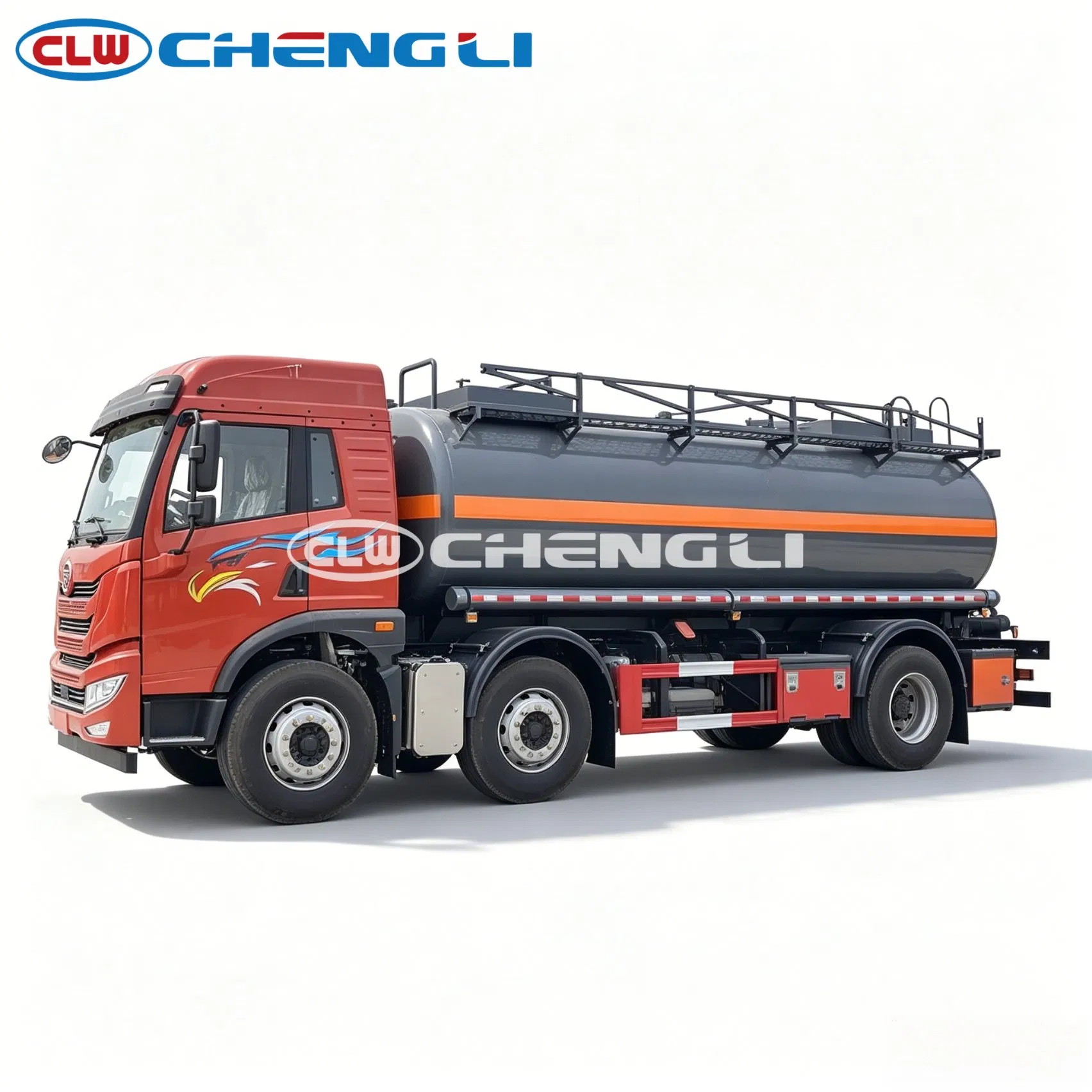
Tank material affects both legal payload and service life over ten years of operation:
Q235B Carbon Steel: Lowest purchase price and easiest to weld in regional workshops. Best for diesel and general fuel distribution where axle-load enforcement is moderate and budget is tight. Internal epoxy coating is recommended for aviation or clean-diesel duties.
5083 Aluminium Alloy: Roughly 35–40% lighter than an equivalent carbon-steel shell, allowing 1,500 to 3,000 litres of extra legal payload per trip. Aluminium does not rust, requires no internal lining, and retains higher scrap/resale value—making it the standard choice on strictly weighed highway corridors in the Middle East and Southern Africa.
304 / 316L Stainless Steel & Steel-Lined PE: Essential for drinking water (304 stainless) and aggressive industrial chemicals (316L or rotomoulded PE lining). Never substitute standard painted carbon-steel water tanker trucks (water bowsers built for road watering and dust control) for potable drinking water delivery—municipal health inspectors reject unlined carbon steel immediately.
LPG Bobtails and Pressure-Vessel Safety Standards
LPG transport carries zero margin for shortcuts. An LPG bobtail tank operates under design pressures of 1.61 to 1.77 MPa (typically designed to GB150 or ASME Section VIII standards). Before signing a contract, verify that your manufacturer supplies full radiographic (X-ray) weld inspection reports, hydrostatic pressure test certificates and post-weld heat treatment documentation—all standard checkpoints inside CLW's Quality Control workflow.
Remember that LPG expands sharply in high ambient temperatures, so tanks are never filled past 80–85% of geometric volume. A 10 m³ LPG bobtail safely carries roughly 4.2 to 4.5 tonnes of LPG depending on propane/butane mix. Depots and refineries handling large volumes of flammable fuel or LPG should also pair storage yards with a dedicated foam fire truck for Class B hydrocarbon fire response.
Matching Chassis, Axles and Regional Export Rules
Liquid cargo shifts dynamically under braking and cornering, so chassis wheelbase, braking system and suspension must be matched to loaded density—diesel is ~0.84 kg/L, water is 1.0 kg/L, and sulphuric acid reaches 1.84 kg/L. Compare all available platforms on our Chassis Overview:
Capacity Band | Drive Layout | Common CLW Chassis | Typical Export Markets |
|---|---|---|---|
5,000 – 10,000 L | 4×2 | East & Southern Africa (RHD), Southeast Asia, island depots | |
12,000 – 20,000 L | 4×2 / 6×4 | Sinotruk HOWO, FAW, Dongfeng | |
22,000 – 30,000 L | 6×4 / 8×4 | HOWO, Shacman, FAW | Long-haul fuel corridors in West Africa, Central Asia, mining haulage |
For petroleum distributors and mining contractors building multi-vehicle fleets, review our sector packages on Oil, Gas & Fuel Distribution and Mining & Quarrying. If your municipality is simultaneously expanding urban sanitation operations, see our separate guide on choosing between garbage compactors, skip loaders and hook lift trucks.
Key Safety Fittings to Specify Before Production
Bottom Loading & Vapour Recovery: Increasingly mandatory at modern depots in the Middle East, Southern Africa and South Asia—specify 4-inch API adapters, optical overfill sensors and vapour-recovery lines upfront so tanks do not fail terminal gate checks.
Emergency Bottom Valve (Subsea Valve): Shear-groove pneumatic shut-off valves automatically seal the tank outlet if pipework is torn off in a rear-end collision.
Anti-Static & Fire Protection: Confirm copper grounding reels, static-discharge drag chains, spark arrestors on the exhaust, front-mounted exhaust routing and twin 8 kg dry-powder fire extinguishers.
Export Shipping Preparation: Tanker trucks ship worldwide via RoRo or bulk vessel with dry, gas-free tanks and full pressure/calibration certificates. Review vessel options on Shipping & Delivery and freight checklists in our Import & Shipping and Price Guides sections.
Common Questions from Tanker Buyers
Can one fuel tanker carry both petrol and diesel on the same trip?
Yes. By dividing the tank into 2 to 5 independent compartments—each with its own manhole, vapour vent, bottom valve and discharge pipe—you can deliver diesel, petrol and kerosene in one route without cross-contamination.
Why is a chemical tanker's volume smaller than a fuel tanker on the same chassis?
Because industrial acids and alkalis have much higher specific gravity (1.3 to 1.84 kg/L compared with 0.84 kg/L for diesel). Tank volume must be reduced so total gross vehicle weight stays within axle and suspension limits.
Do CLW fuel and LPG tankers come in Right-Hand Drive (RHD)?
Yes. All CLW fuel tankers, mobile refuellers, LPG bobtails, chemical tankers and potable water trucks are built in both LHD and RHD across Euro II to Euro VI emission standards.
What calibration and inspection certificates ship with an LPG or fuel tanker?
Every unit ships with factory pressure/leak test reports, tank volume calibration charts, chassis certificates of origin and commercial export documents. Third-party SGS, BV or PVoC inspections are arranged directly at the factory prior to port delivery.
How long does it take to build a custom tanker truck?
Standard carbon-steel fuel tankers and bowsers take 25 to 35 working days. Aluminium alloy, stainless-steel chemical and pressure-vessel LPG tankers typically require 35 to 45 working days due to specialised welding and radiographic inspection.
Need help calculating compartment splits, axle weights or tank wall thickness for your target country? Browse the full CLW Products Catalogue, explore more comparisons in Buying Guides, or request a factory-direct quote (or message our engineers via Contact CLW) with your cargo type, target volume, LHD/RHD requirement and destination port.
Discuss your truck requirement
Share your working task and destination with the CLW team.
Build Your Enquiry