
Water tanker trucks—commonly called water bowsers across Africa, the Middle East, and South Asia—look deceptively simple on a specification sheet. Yet when contractors and municipalities compare quotations from 5,000 litres up to 25,000 litres, the spread between a basic dust-control sprinkler and a food-grade potable tanker or fog-cannon dust suppression unit can easily exceed 50% on the exact same tonnage class.
The reason is straightforward: water weighs one kilogram per litre, so every 5,000-litre step forces a heavier chassis, stronger axles, and thicker tank baffles, while the intended end use—road watering, mining and quarrying haul-road suppression, landscape irrigation, or drinking water delivery—dictates steel metallurgy, internal coating, pump architecture, and spray hardware.
Capacity Tiers From 5,000 L to 25,000 L
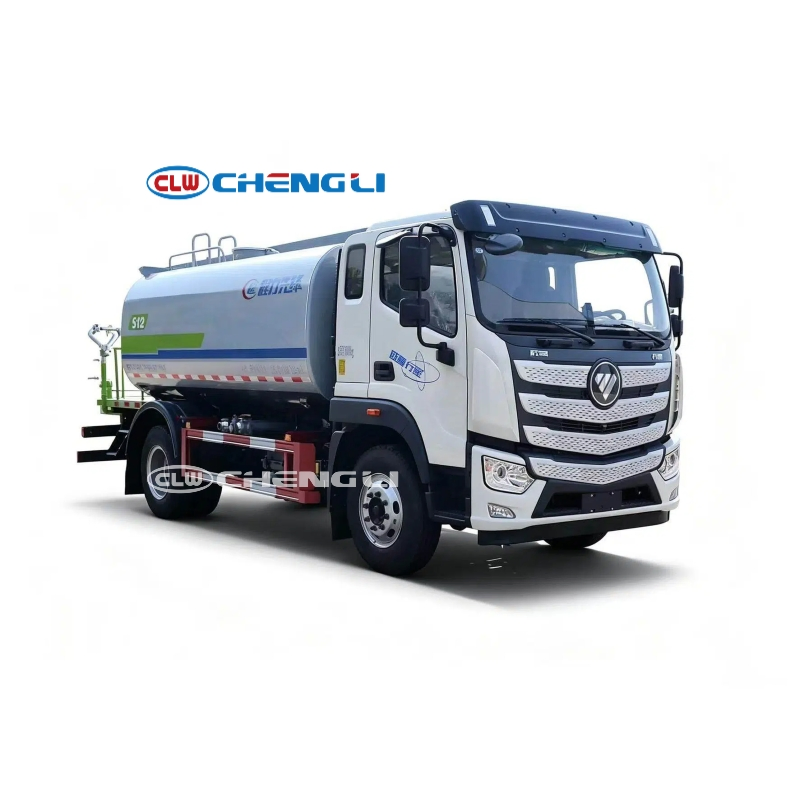
Tank volume sets the baseline chassis class before any options are added. A 5,000 L to 8,000 L compact water tanker truck sits comfortably on a light 4x2 platform for narrow urban streets, parks, and estate maintenance. Moving into the 10,000 L to 12,000 L workhorse range—such as our Dongfeng 10–12 m³ water tanker truck—remains on a heavy 4x2 chassis, which keeps purchase price, tyre replacement, and fuel burn low while covering most municipal and road-building shifts.
Once requirements pass 15,000 L to 20,000 L, a 6x4 tandem-axle chassis becomes mandatory to handle gross vehicle weight legally and safely on unpaved grades. Heavy quarry and highway fleets specifying 22,000 L to 25,000 L units—similar in scale to heavy-duty large-capacity water tanker configurations—move into high-horsepower 6x4 or 8x4 chassis classes, where chassis price alone often doubles compared with an 8,000 L 4x2 unit.
Tank Capacity Tier | Typical Drive Layout | Relative Price Tier | Typical Operating Role |
|---|---|---|---|
5,000 – 8,000 L | 4x2 light-duty | Entry (1.0x baseline) | Urban landscaping, narrow streets, small civil sites |
10,000 – 12,000 L | 4x2 medium-heavy | Mid (1.3x – 1.6x) | Municipal road washing, general roadworks, water supply |
15,000 – 20,000 L | 6x4 heavy-duty | Upper-Mid (1.9x – 2.5x) | Highway compaction, quarry dust control, bulk water haulage |
22,000 – 25,000 L | 6x4 heavy / 8x4 | Heavy (2.5x – 3.2x) | Large mine haul roads, arid-region bulk water transport |
Tank Material: Carbon Steel, Epoxy Lining or 304 Stainless Steel
Tank metallurgy is the biggest upper-body cost swing on a water bowser. Standard non-potable road sprinklers use Q235B carbon steel (typically 4 mm shell with 5 mm end heads on smaller tanks, stepping up to 5 mm shell and 6 mm heads on 15,000 L to 25,000 L tankers). Internal anti-surge baffle plates are welded every 1.2 to 1.5 metres to stop water slosh from destabilising the truck during braking or cornering.
When a buyer needs a potable water tanker for camps, hotels, or emergency municipal supply, two cost paths exist. The economical route keeps a carbon steel shell and applies a multi-coat food-grade epoxy resin lining after abrasive shot-blasting, adding a modest 6% to 12% to the tank fabrication cost. The long-life route fabricates the entire tank, baffles, manhole, and piping in SUS304-2B food-grade stainless steel. Stainless steel typically increases the upper-body fabrication cost by 45% to 75% (or roughly 15% to 25% of the complete truck price), yet it eliminates relining maintenance and resists corrosion from chlorinated or slightly brackish water for over a decade.
Pump Architecture, Spray Hardware and Fog Cannon Upgrades
A standard export water bowser is fitted with a PTO-driven self-priming centrifugal water pump (commonly 60 m³/h flow rate with 90 m head, or 40 m³/h on compact models), feeding front duckbill flushing nozzles, rear fan-shaped sprinklers, side green-belt nozzles, a rear working platform, and a 360-degree high-pressure water monitor capable of reaching 25 to 35 metres. Adding fire-hydrant Storz or BS couplings and self-suction hoses with a 6 to 7 metre vertical lift keeps field refilling fast from ponds or rivers at minimal extra cost.
Costs climb noticeably when the truck is upgraded into a dedicated dust suppression truck with a rear-mounted mist cannon—such as our Foton 80-metre dust suppression truck. A fog cannon package adds an independent diesel generator set (typically 20 kW to 120 kW depending on throw range from 30 m to 100 m), a high-pressure plunger mist pump, a stainless-steel fan barrel with hydraulic elevation and remote control, and an enclosed generator canopy. Depending on throw distance, the mist cannon and genset assembly can add 25% to 55% to the price of a comparable standard water bowser.
Similarly, fleets evaluating municipal sanitation trucks sometimes combine road washing with mechanical sweeping; in those cases, a dedicated road sweeper truck or washing and sweeping truck sits in a higher budget bracket because of its auxiliary engine, suction fan, and stainless debris hopper.
Upper-Body Upgrade | Impact on Complete Truck Price | Best Suited Application | Maintenance Consideration |
|---|---|---|---|
Food-grade epoxy internal lining | +3% to +6% | Budget drinking water transport | Inspect lining annually for pinholes or abrasion |
SUS304 stainless steel tank & piping | +15% to +25% | Potable water, coastal/saline environments | Minimal internal corrosion; higher resale value |
30–50 m fog cannon + diesel genset | +18% to +30% | Urban demolition, coal yards, municipal haze control | Regular genset servicing and mist nozzle descaling |
80–100 m fog cannon + heavy genset | +35% to +55% | Open-pit mines, ports, bulk material stockyards | Requires 6x4 chassis and clean filtered water supply |
Chassis Brand and Regional Specification Choices
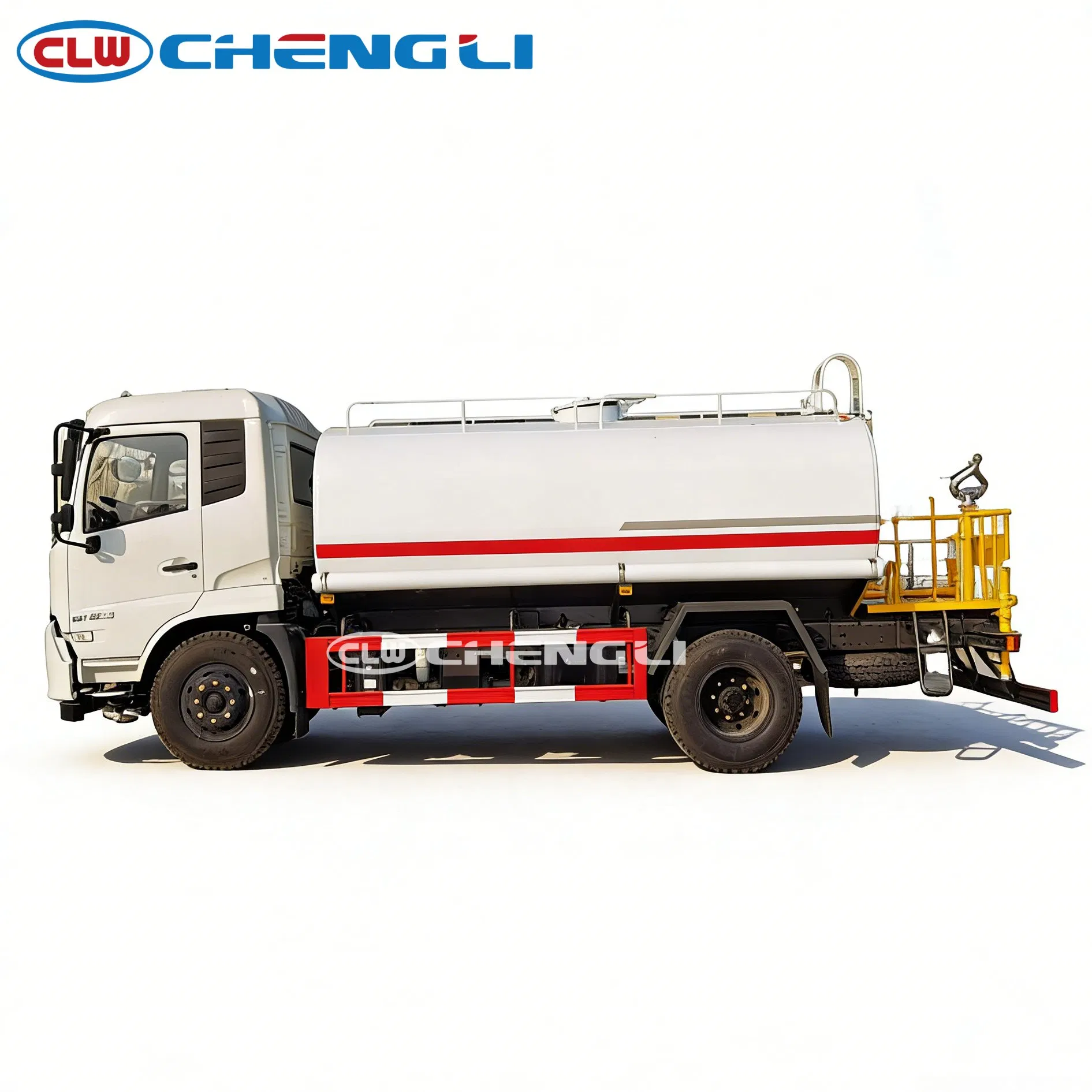
On 5,000 L to 12,000 L bowsers, Dongfeng special trucks and Foton special trucks provide the strongest value per litre of payload, while Isuzu special trucks are frequently specified by NGOs, resorts, and city councils in Southeast Asia and Africa that prioritise local dealership parts. For 15,000 L to 25,000 L mine and highway tenders in the Middle East and construction and road-building projects, Sinotruk HOWO special trucks and Shacman special trucks are preferred for their heavy 16-tonne rear axles and high-torque drivelines.
Operating environment also affects chassis cost. High-ambient regions require upgraded cooling packages, cab air conditioning, and desert oil-bath air cleaners, while city services and sanitation tenders in stricter jurisdictions require Euro V or Euro VI engines. Reviewing our technical spec sheets helps confirm wheelbase and gross vehicle weight margins before locking a tank volume.
Export Freight and Packaging Considerations for Water Bowsers
Because water tanks are hollow cylinders or ellipses, their external volume (CBM) directly drives Ro-Ro ocean freight. A 10,000 L 4x2 bowser typically measures around 7.5 to 8.2 metres long and 2.8 to 3.1 metres tall, keeping Ro-Ro charges reasonable. Adding a tall fog cannon frame on the rear platform can push overall height past 3.3 metres, triggering over-height surcharges on certain vessels unless the cannon barrel is dismounted and secured on the deck for transit.
For compact 5,000 L units shipping to island ports with infrequent Ro-Ro sailings, partial disassembly into a 40 ft high-cube container can sometimes beat Ro-Ro landed cost—a trade-off explained in our Ro-Ro vs flat-rack vs container guide. Always check whether the quote includes full anti-rust wax spraying, hydrostatic pressure testing under factory quality control, and spare pump mechanical seals under warranty and spare parts.
Common Questions About Water Tanker Truck Pricing
Does an elliptical tank cost more than a cylindrical tank?
Only slightly. Elliptical cross-sections require specific rolling dies and internal stiffeners, which adds a minor fabrication premium, but they lower the centre of gravity and improve road stability on 10,000 L to 20,000 L trucks—making them standard on most CLW water bowsers.
Can a water tanker double as an emergency fire support truck?
A standard water bowser with a 60/90 pump and rear cannon can assist with grass fires or washdowns, and it costs far less than a certified water tender fire truck. However, it does not replace a dedicated fire engine with a high-pressure fire pump, equipment lockers, and crew cab.
Why is a 20,000 L 6x4 bowser much more expensive than two 10,000 L 4x2 units?
Actually, a single 20,000 L 6x4 truck usually costs less to buy and operate than two 10,000 L 4x2 trucks because you pay for one cab, one engine, one driver, and one shipping slot—though two smaller trucks offer redundancy and better access on tight city lanes.
What spares should be budgeted with a new water bowser?
Plan a small spares allowance (typically 2% to 4% of FOB value) for extra pump mechanical seals, pneumatic or manual ball valves, duckbill and sprinkler nozzle heads, suction hoses, and chassis service filters.
Need an accurate factory quote for your next water bowser or mist-cannon fleet? Explore our complete vehicle range, compare other categories in our price guides, or share your target tank volume, steel grade, and destination port via get a quote or contact our export team.
Discuss your truck requirement
Share your working task and destination with the CLW team.
Build Your Enquiry