
Southeast Asia is one of the most technically varied special-truck regions in the world. Within a few hours' flight across ASEAN, fleet operators switch between left-hand drive and right-hand drive, Euro 4 and Euro 5 emissions, and dense historic city lanes where a 2.5-metre-wide heavy truck cannot make a ninety-degree turn. Add 85% year-round coastal humidity, monsoon downpours, and salt-laden sea air from Manila Bay to Port Klang and Surabaya, and standard painted mild-steel superstructures rust through long before the engine reaches its first overhaul.
Across Southeast Asian special truck markets, successful fleet specifications focus on three practical variables: matching drive side and wheelbase to tight urban geometry, upgrading anti-corrosion coatings and stainless-steel wet parts, and selecting locally supported Japanese-lineage or proven Chinese chassis platforms.
Split LHD/RHD Rules and Chassis Preferences Across ASEAN
Unlike Africa's broad regional blocks, ASEAN is split down the middle on steering configuration. The Philippines, Vietnam, Cambodia, and Laos are left-hand-drive (LHD) markets, whereas Malaysia, Indonesia, Thailand, Singapore, and Brunei operate right-hand-drive (RHD) fleets. Emission standards have also tightened rapidly—Malaysia, Thailand, and the Philippines enforce Euro 4 or higher on new registrations, while Indonesia has transitioned commercial diesels to Euro 4.
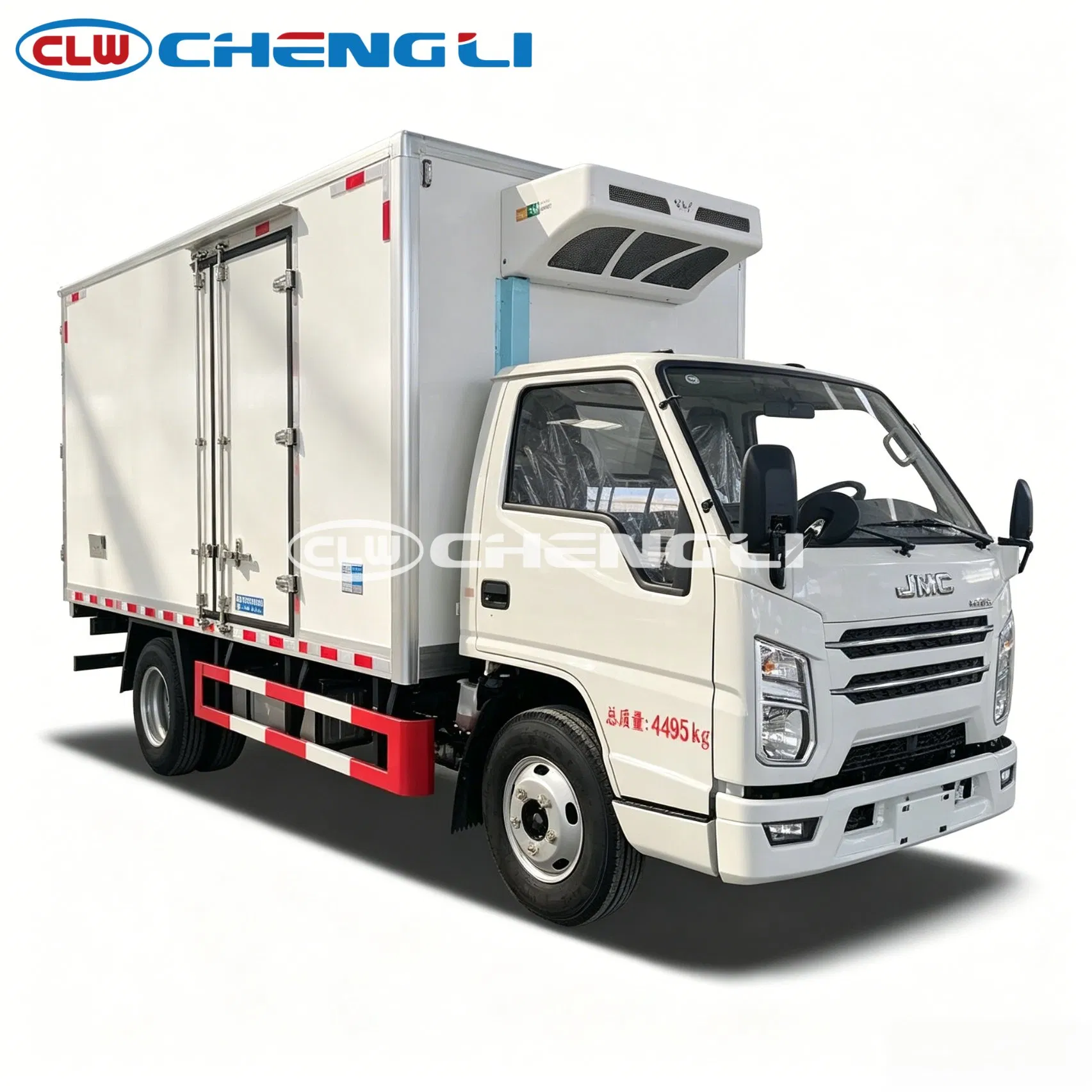
Because Japanese light- and medium-duty trucks have dominated ASEAN cities for decades, Isuzu commercial chassis (ELF N-Series, Forward F-Series, and Giga) remain the first choice for municipal tenders and cold-chain distributors in the Philippines, Malaysia, and Indonesia. Where budget efficiency or heavier vocational payloads are the priority, Dongfeng special truck chassis, JAC light and medium chassis, Foton commercial platforms, and JMC urban light trucks provide compact footprints and short turning radii suited to barangay roads, shophouse alleys, and industrial parks.
Country | Drive Side | Main Entry Ports | Dominant Special Truck Demand |
|---|---|---|---|
Philippines | LHD | Manila, Cebu, Subic | Rear-loader compactors, water tenders, reefers |
Malaysia | RHD | Port Klang, Pasir Gudang | Arm roll (hook-lift) trucks, compactors, tankers |
Indonesia | RHD | Tanjung Priok, Surabaya | Arm roll trucks, fire engines, mining & palm-oil tankers |
Thailand & Vietnam | RHD (TH) / LHD (VN) | Laem Chabang, Haiphong, Cat Lai | Cold-chain reefers, fire trucks, urban sweepers |
Urban Waste Fleets: Arm Roll Trucks and Compact Rear Loaders
Municipal waste collection in Southeast Asia looks very different from wide-boulevard North American or Middle Eastern routes. In Malaysian housing estates, Indonesian regencies, and Philippine barangays, high-moisture household waste sits in narrow lanes lined with parked scooters and overhead cables. Choosing the right body style from our waste collection truck range prevents both vehicle damage and severe leachate corrosion.
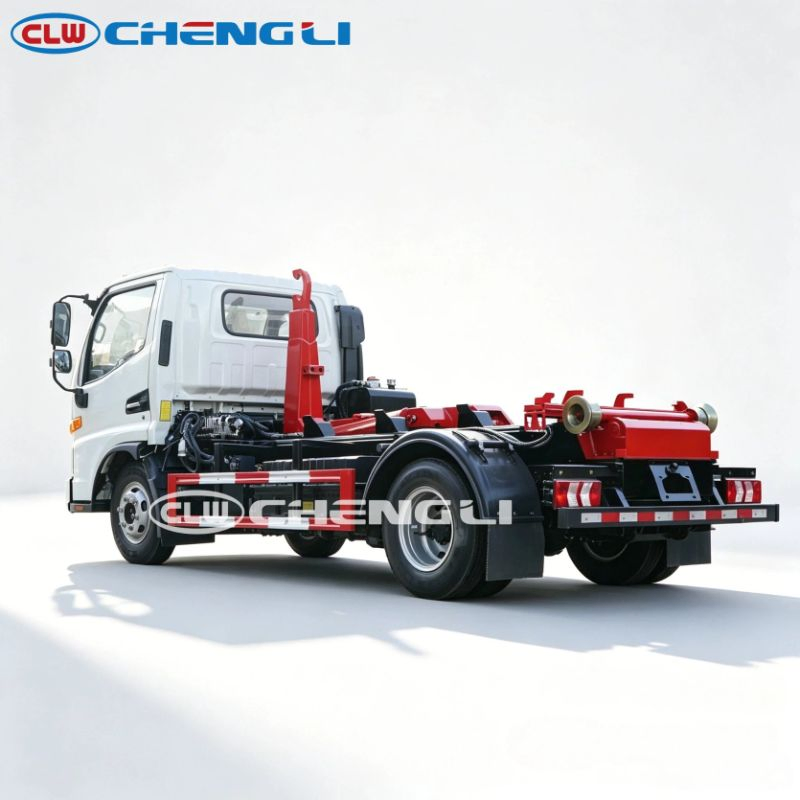
In Malaysia and Indonesia, the undisputed workhorse is the arm roll truck—known internationally as a hook-lift garbage truck. Municipal contractors drop 6 m³ to 12 m³ sealed RORO bins at wet markets, condominiums, and construction sites, then collect them rapidly using a medium-duty JAC hook-lift arm roll truck or a heavy multi-axle Dongfeng hook-lift carrier. Because tropical rain fills uncovered skips, we fit heavy-duty hydraulic locking hooks, galvanised or epoxy-primed subframe rails, and rear drip trays.
In the Philippines, LGU (Local Government Unit) tenders heavily favour 6 m³ to 14 m³ rear-loading garbage compactor trucks with short wheelbases and bin-lifters compatible with 240 L and 660 L plastic wheelie bins. For wet-market and hotel organic collection in Bangkok, Ho Chi Minh City, and Kuala Lumpur, sealed food waste collection trucks—such as our Dongfeng stainless-lined food waste truck—eliminate odour trails and liquid spillage. Fleet planners deciding between bin-swap and compaction fleets can compare lifecycle costs in our waste truck selection guide.
Coastal Humidity, Corrosion Control, and Cold-Chain Reefers
High ambient heat combined with 80–90% relative humidity accelerates both structural rust and thermal load on refrigerated vans. Seafood, poultry, and frozen-food distributors operating across Southeast Asian agriculture and cold-chain corridors lose significant cargo value when poorly insulated bodies sweat or lose set-point temperature during traffic jams in Metro Manila, Jakarta, or Bangkok.
Within our cold-chain logistics truck lineup, every tropicalised refrigerated truck is built with 80 mm to 100 mm vacuum-bonded polyurethane foam insulation, seamless FRP (fibreglass-reinforced plastic) inner and outer skins, 304 stainless-steel door hinges and locking rods, and aluminium T-floor ducting so cold air circulates underneath stacked pallets. We pair these boxes with oversized Thermo King, Carrier, or proven Chinese deep-freeze units rated down to -18 °C even at 38 °C ambient humidity. For dry FMCG and parcel distribution during monsoon season, weather-sealed van and box trucks use EPDM triple-lip door gaskets and anti-slip phenolic flooring.
Tropical Hazard | Failure Mode on Standard Builds | CLW ASEAN Specification Upgrade | Affected Fleet Types |
|---|---|---|---|
Coastal Salt & Monsoon Rain | Hopper floor rust, seized door locks, wiring shorts | Epoxy zinc-rich primer, 304 stainless hardware, IP67 connectors | Compactors, arm rolls, reefers |
Narrow Urban Streets | Mirror strikes, inability to turn in alleys | Short wheelbase (3,308–3,800 mm), 2.1–2.3 m body width | Barangay compactors, city reefers |
High-Humidity Thermal Load | Condensation, slow pull-down to -18 °C | 100 mm vacuum-bonded PU panels + high-BTU evaporator | Seafood & frozen-food reefers |
Firefighting and Emergency Vehicles for Industrial Parks and Islands
Rapid industrialisation across Batam, Rayong, Cavite, Johor, and Binh Duong—paired with dense timber-and-concrete urban neighbourhoods—drives consistent municipal and private-factory procurement of firefighting and rescue vehicles. Narrow access lanes mean a single 18-tonne 6x4 fire engine often cannot reach the fire seat; instead, local fire bureaux pair a nimble 3,000–5,000 litre water tender fire truck for initial attack with larger 8,000–12,000 litre foam fire trucks positioned at industrial estates, fuel terminals, and palm-oil refineries.
All ASEAN fire builds use corrosion-resistant 304 stainless-steel or composite PP (polypropylene) water and foam tanks—especially vital when municipal hydrants occasionally draw brackish coastal water. Pump rooms are fitted with tropicalised PTO cooling loops, bronze or hard-anodised aluminium manifolds, and waterproof LED perimeter lighting for monsoon night operations. Technical requirements for firefighting and disaster response fleets are detailed further in our export specification guide for fire engines and cold-chain trucks.
Quality Verification and Regional Delivery
Before shipment to Manila, Port Klang, Tanjung Priok, Laem Chabang, or Haiphong, every ASEAN unit passes water-tightness rain testing, hydraulic pressure cycling, and coating thickness verification under our factory quality control standards and export compliance and certification protocols. Short sea transit times from Chinese ports (typically 5 to 12 days via Ro-Ro or container) make ordering straightforward when buyers follow our step-by-step ordering workflow and regional shipping options.
Common Regional Buying Questions
Can CLW build both LHD trucks for the Philippines/Vietnam and RHD trucks for Malaysia/Indonesia/Thailand?
Yes. We build on genuine factory LHD and RHD chassis from Isuzu, Dongfeng, JAC, Foton, and JMC, matching each country's steering law, lighting regulations, and local Euro 4/Euro 5 emission rules.
What body width works best for narrow Philippine barangay roads or Malaysian shophouse lanes?
For tight residential access, we recommend a 4x2 light-to-medium chassis with a wheelbase between 3,308 mm and 3,800 mm and an overall body width of 2.1 to 2.25 metres—typically a 5–8 m³ compactor, 6 m³ arm roll, or 4.2-metre refrigerated box.
Why do Southeast Asian fire trucks increasingly specify PP or 304 stainless-steel tanks?
High humidity, chemical foam concentrates, and occasional brackish coastal water corrode painted carbon-steel fire tanks from the inside out. Switching to 304 stainless steel or welded polypropylene eliminates internal rust and prevents pump strainer blockages during emergencies.
How long does sea freight take from China to major ASEAN ports?
Direct Ro-Ro or container sailings from Shanghai, Xiamen, or Guangzhou typically take 5 to 7 days to Manila or Haiphong, and 8 to 12 days to Port Klang, Laem Chabang, or Tanjung Priok.
Specifying LHD or RHD special trucks for the Philippines, Malaysia, Indonesia, Thailand, or Vietnam? Explore our full special purpose vehicle catalogue, read more regional guides in CLW Market Insights, or share your tender specs via request a quote or our ASEAN export desk.
Discuss your truck requirement
Share your working task and destination with the CLW team.
Build Your Enquiry