
A single load of spoiled frozen seafood, fresh produce, or temperature-sensitive vaccines can cost more than a full year of preventive service on a refrigerated truck. In tropical and desert climates, most mid-route temperature excursions are not caused by major compressor meltdowns—they stem from choked condenser fins, slipping drive belts, iced-over defrost drains, and torn rear-door rubber gaskets letting humid air pour into the cargo box.
Whether your fleet runs engine-driven Thermo King, Carrier, or Kaixue chillers on light urban delivery vans or independent diesel-powered reefer units on heavy 10-tonne cold chain logistics trucks, disciplined weekly coil cleaning and pre-cooling checks keep pull-down times crisp and cargo claims at zero. These workshop standards also apply to climate-controlled medical units across our medical vehicle range, where cabin and pharmaceutical refrigeration cannot afford unplanned downtime.
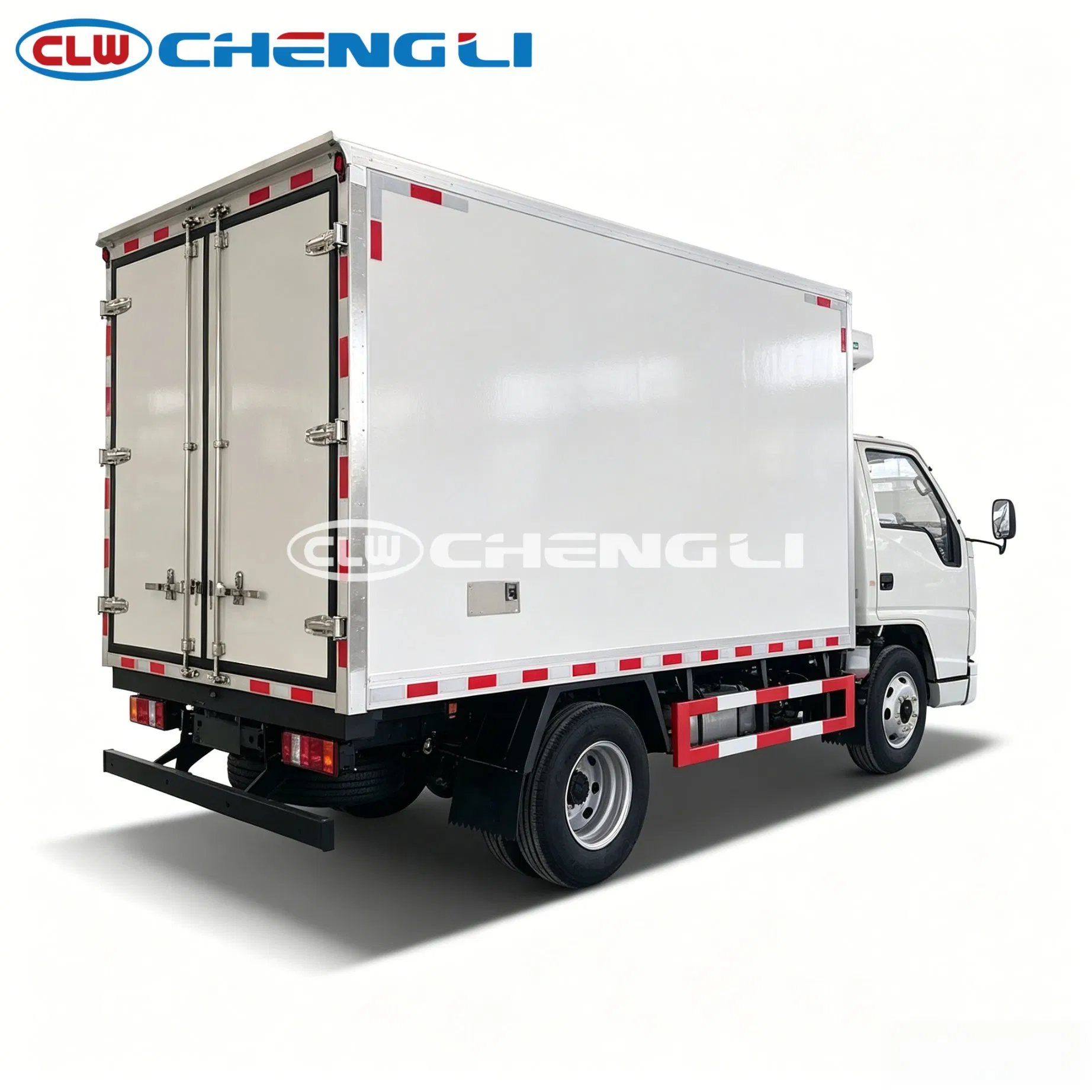
Condenser Coil Cleaning, Belts, and Refrigerant Checks
Every refrigeration unit rejects heat from inside the insulated cargo box to the outside air through the roof-mounted or nose-mounted condenser coil. When insects, road dust, and diesel soot pack between the aluminium fins, head pressure skyrockets, the high-pressure cut-out switch trips repeatedly, and compressor discharge temperatures climb into the danger zone. Rinse condenser coils gently from the inside out using low-pressure clean water every two weeks—weekly during dusty harvest seasons or in high-ambient corridors across Southeast Asia, Africa, and the Middle East (see our Middle East high-heat special trucks guide for tropical compressor sizing).
Never blast a condenser or evaporator coil with a high-pressure washer, which folds the thin aluminium fins flat and permanently blocks airflow. If fins are greased with road oil, apply a mild non-acidic coil cleaner, let it soak for five minutes, and flush thoroughly with low-pressure water.
On chassis-engine-driven reefer systems fitted to Isuzu, Dongfeng, Foton, JAC, and FAW light and medium trucks, inspect the secondary compressor drive belt tension and bracket bolts every week. A loose V-belt slips under high head pressure, glazes the pulley groove, and snaps without warning. Check the receiver-drier sight glass with the unit running at set-point: a continuous stream of bubbles indicates low refrigerant charge (R404A or R134a depending on target temperature) and means a leak search with an electronic sniffer is required before topping up.
Evaporator Defrost Drains, Door Gaskets, and Insulated Box Care
Inside the cargo box, moisture enters every time rear or side doors open in humid weather and freezes onto the evaporator coil. During automatic hot-gas or electric defrost cycles, meltwater must exit cleanly through the rubber drain tubes (kazoo valves) routed beneath the chassis. If cardboard shreds or shrink-wrap clog the drain pan, water backs up, refreezes into a solid ice block around the evaporator fans, and stalls the fan motors. Flush the drain lines with warm water monthly and confirm the rubber flapper tips open freely without letting warm outside air siphon in.
Perform a simple darkness test on your FRP/PU insulated box once a month: step inside the empty cargo body, have a colleague latch the rear doors, and look along the entire perimeter seal. Any sliver of daylight means warm, wet air is leaking in, forcing the compressor to run nonstop. Wipe silicone lubricant onto EPDM door gaskets monthly so they do not stick and tear during sub-zero (-18 °C) operation, and repair forklift punctures in the inner fibreglass skin immediately with waterproof resin before moisture saturates the polyurethane foam core and ruins its K-value insulation rating.
Strict box-integrity habits benefit the whole commercial cargo fleet—from dry box trucks and ventilated livestock trucks to sealed bulk feed trucks supporting agriculture and cold chain distribution.
Preventive Maintenance Schedule for Reefer Units and Cold Boxes
Track maintenance on independent diesel reefers by unit engine hours, and on truck-driven units by chassis operating hours. For export fleets specifying chillers alongside temperature-controlled mobile clinic trucks, patient transport ambulances, ICU ambulances, or negative pressure ambulances, our export specification guide details standby shore-power and dual-compressor options.
Interval | Component / System | Maintenance Action | Target Standard |
|---|---|---|---|
Daily (Pre-Load) | Pre-cooling, drain tubes & door seals | Pre-cool box to set-point; check drain pan & gasket contact | Pull-down matches spec; clean drains; tight latch pressure |
Weekly (50 hrs) | Compressor belts, clutch & sight glass | Check belt deflection, mounting bolts & refrigerant bubbles | 10–12 mm belt deflection; clear sight glass at steady load |
Bi-Weekly | Condenser & evaporator coils | Low-pressure rinse condenser fins; check airflow clearance | Straight, unobstructed fins; full fan draw across coil |
Monthly (250 hrs) | Defrost cycle, box floor & T-rails | Force manual defrost; wash aluminium T-floor channels | Complete melt-off; zero standing water; intact PU wall panels |
Every 500–1,000 hrs | Independent engine oil, filters & receiver-drier | Change reefer diesel oil/filters; verify superheat & pressures | Clean oil; suction/discharge pressures match ambient chart |
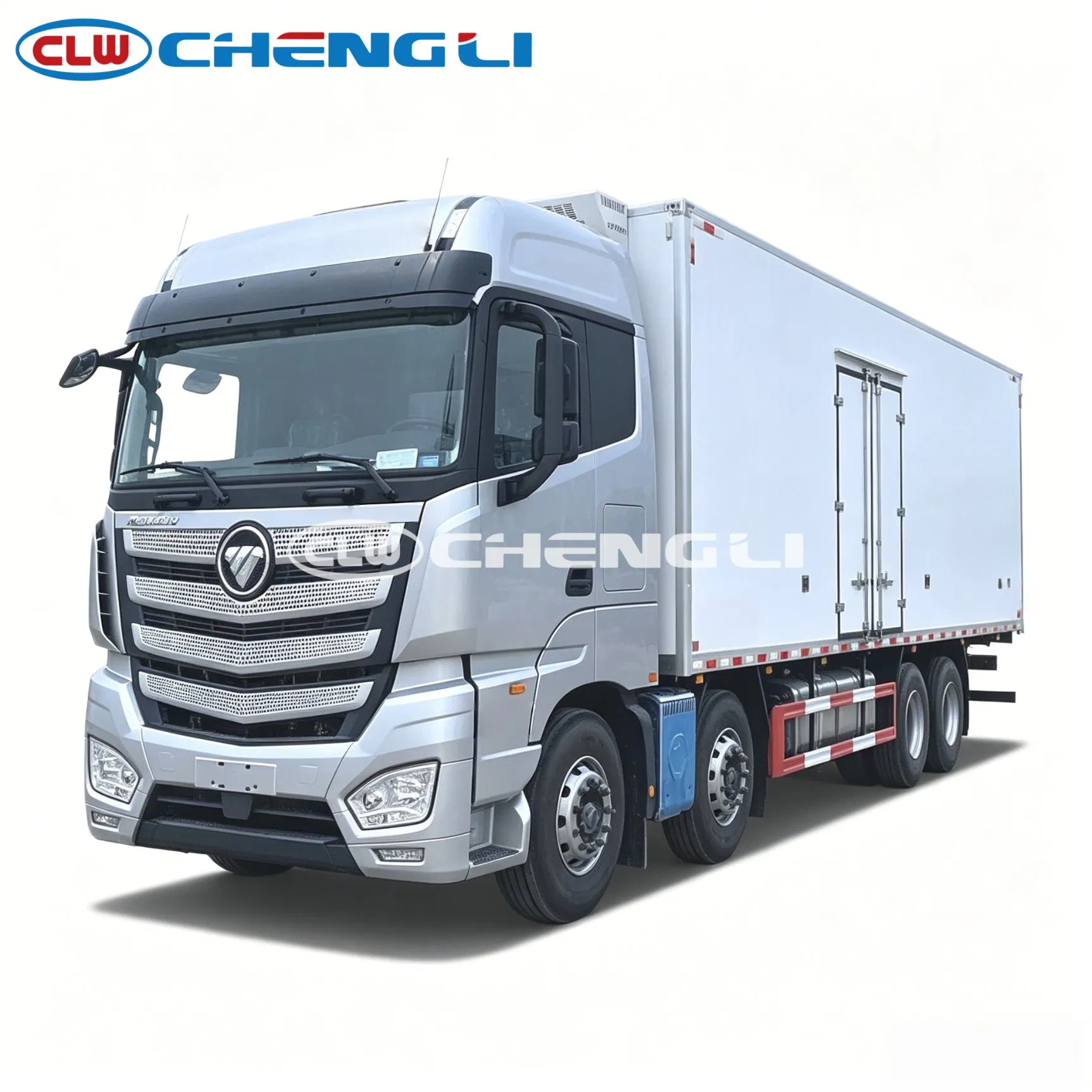
Pre-Cooling Discipline and Loading Airflow Rules
A transport refrigeration unit is engineered to maintain cargo temperature, not to pull down warm produce loaded straight from an uncooled field shed. Always pre-cool the insulated box to the target cargo temperature with the doors closed for 45 to 60 minutes before backing onto the loading bay, and shut the reefer unit off while the doors are wide open so the evaporator fans do not pull warm, humid dock air straight across the coil.
Train loaders never to stack cartons tight against the front bulkhead or up to the ceiling return air grille. Keep at least 150 mm of headroom under the evaporator discharge chute and use slatted pallets or aluminium T-floor channels so cold air circulates underneath the load and returns freely to the front bulkhead. Every insulated body leaving our workshop is thermal-leakage checked under CLW quality control, with strip curtains, meat rails, and multi-temperature bulkheads built through factory customisation and OEM engineering—yet blocked return airflow will defeat even the highest-spec chiller.
Reefer Unit Troubleshooting Table
Before venting refrigerant or swapping control boards, walk through these high-frequency faults and verify pressure targets against your model's refrigerated truck spec sheets.
Symptom | Most Likely Cause | Workshop Diagnosis | Corrective Action |
|---|---|---|---|
Unit runs continuously but fails to reach -18 °C | Dirty condenser, low refrigerant, or leaking door gasket | Check head pressure, sight glass bubbles & door seal light test | Wash condenser; find/repair leak & weigh in charge; replace seal |
Evaporator turns into a solid block of ice | Clogged defrost drain, failed defrost termination switch, or open doors | Check drain tube flow; test defrost solenoid/heater continuity | Clear drains with warm water; replace faulty defrost sensor/relay |
High-pressure alarm trips in midday traffic | Blocked condenser fins, failed condenser fan, or overcharged system | Confirm both condenser fans spin at full speed; check gauge pressure | Clean fins; replace burnt fan motor/relay; recover excess charge |
Compressor clutch fails to engage | Low-pressure cut-out open, blown fuse, or worn clutch air gap | Measure 12V/24V at clutch coil; check static system pressure | Fix refrigerant leak if empty; replace relay/fuse; shim clutch gap |
Water pools inside cargo box floor | Frozen or blocked evaporator drain line, or damaged roof seam | Inspect drain hose routing and top-corner sealant joints | Unblock kazoo drain valves; re-seal exterior corner extrusions |
Common Maintenance Questions
Should I run the reefer unit while the cargo doors are open during loading?
No. Turn the refrigeration unit off before opening the rear doors. Running the evaporator fans with open doors draws humid outside air into the box, instantly coating the cold coil with frost and lengthening post-loading pull-down time. Fit heavy-duty PVC strip curtains if your route involves frequent multi-drop kerbside deliveries.
How often should refrigerant be topped up on a truck reefer unit?
A properly sealed refrigeration circuit does not consume refrigerant. If your unit needs topping up every few months, there is a physical leak—most commonly at flexible hose crimps near the chassis-mounted compressor, flare fittings, or the compressor shaft seal. Always nitrogen pressure-test, repair the leak, evacuate with a vacuum pump, and weigh in fresh refrigerant.
What temperature loss happens if a forklift punctures the inner FRP wall?
Even a small puncture allows washdown water and condensation to wick into the closed-cell polyurethane foam, turning wet insulation into a thermal bridge that adds dead weight and increases compressor runtime. Dry the damaged pocket completely and patch it with fibreglass mat and food-grade gelcoat or silicone sealant before the next shift.
What spares should a cold-chain fleet keep in its workshop?
Keep matched sets of compressor drive belts, condenser and evaporator fan motors, defrost sensors, receiver-driers, door gasket sections, door cam-lock handles, and cab controller fuses. Unfamiliar cold-chain terms such as K-value or pull-down rate are explained in our technical glossary.
Need replacement drive belts, door gaskets, fan motors, or complete chiller spare kits? Reach out via CLW warranty and spare parts or arrange technician guidance through our training and technical support service. You can read more preventive checklists in our maintenance hub, explore our full special truck range, or contact our after-sales engineers with your chiller model and box length.
Discuss your truck requirement
Share your working task and destination with the CLW team.
Build Your Enquiry