
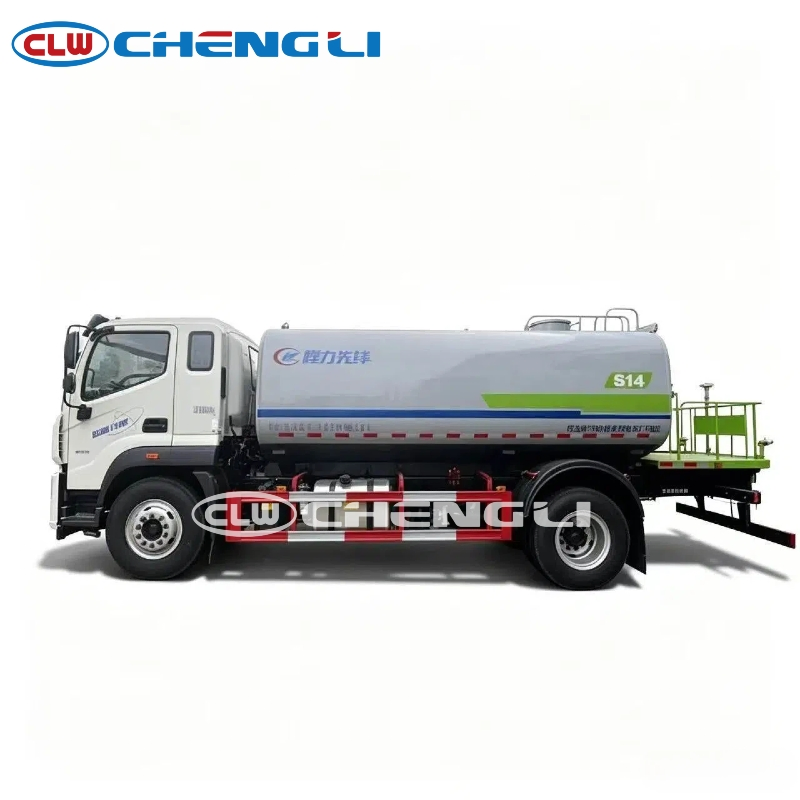
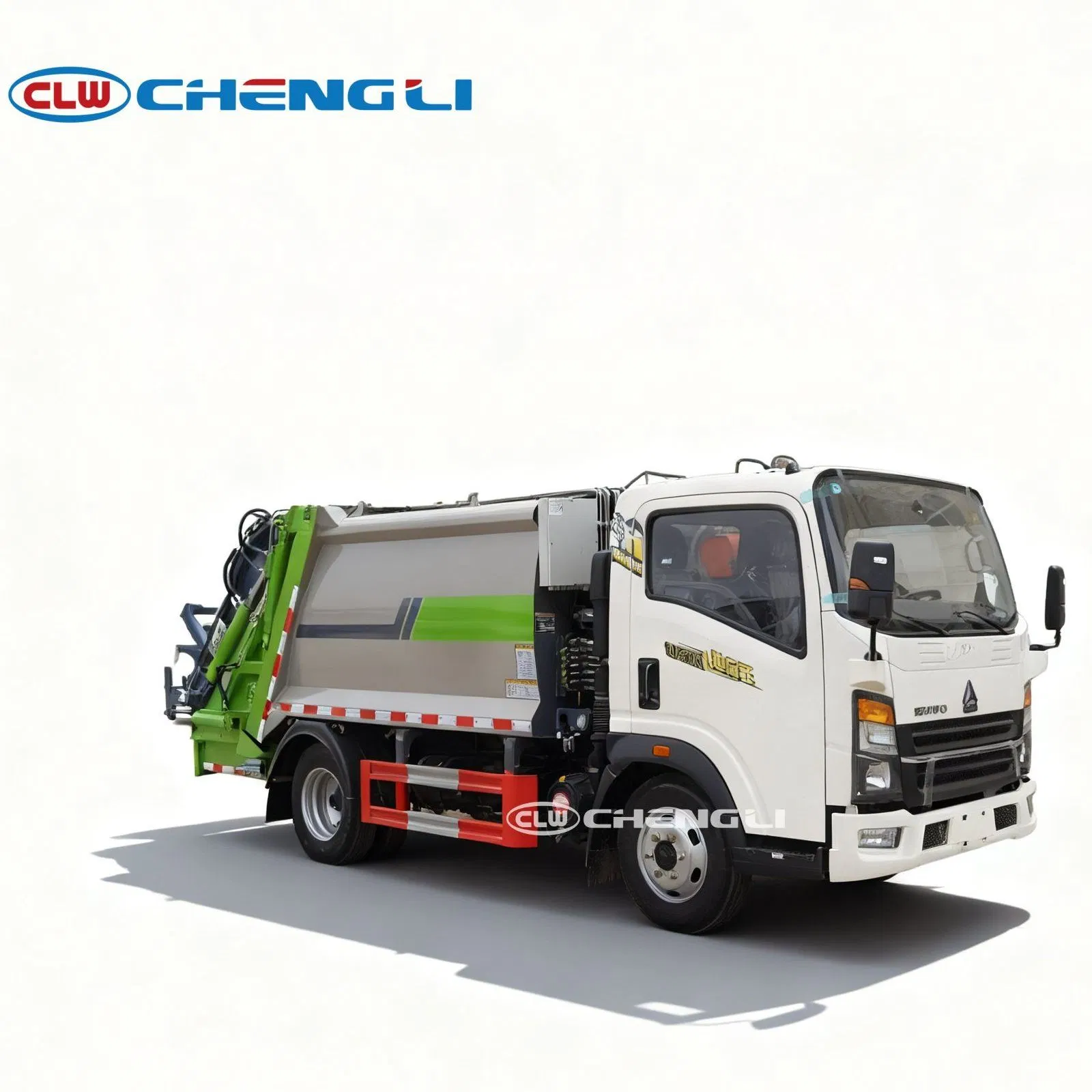
Ordering a standard tractor head off a dealer lot is straightforward. Importing a built-to-order special purpose truck from China is a different operational exercise altogether. A water tanker truck for rural road grading in Kenya, a rear-loading garbage compactor truck heading to Lagos, or an ICU ambulance configured for Manila all involve chassis allocation, superstructure fabrication, hydraulic or medical integration, export licensing, and destination customs compliance running in sequence.
At Chengli Automobile Group, we move hundreds of special purpose vehicles every year from our Suizhou plants through Shanghai, Tianjin, Qingdao, and Lianyungang to ports across Africa, Southeast Asia, South Asia, and the Middle East. Nearly every costly delay at destination ports traces back to something overlooked before production even started—an unverified steering side rule, a missing emission certificate, or a consignee name that does not match the import permit. The sequence below sets out how experienced fleet buyers take an order from initial enquiry to port handover without surprises.
Locking Down Destination Regulations Before Specification Freeze
Before requesting a proforma invoice or comparing chassis brands, verify the legal entry rules in your country of registration. Customs authorities rarely grant exceptions once a vehicle lands at the quay, and re-exporting a rejected truck costs far more than checking regulations upfront.
Steering configuration (LHD vs RHD): Markets such as Kenya, Tanzania, Uganda, Pakistan, Malaysia, and much of the Caribbean mandate right-hand drive (RHD) for road registration. West Africa, the Middle East, and Central Asia operate left-hand drive (LHD). Confirm whether your chosen chassis—whether from Sinotruk HOWO, Dongfeng, Shacman, or Isuzu—offers factory RHD availability in the exact wheelbase you need.
Emission and fuel-quality compatibility: Many export markets require Euro II, Euro III, or Euro IV engines because local diesel sulphur levels can clog Euro V or Euro VI SCR and DPF systems. Conversely, Gulf states and several Southeast Asian cities enforce Euro IV or Euro V minimums.
Axle load and overall dimension limits: Over-height or over-width superstructures trigger special road permits or port surcharges. If you are ordering a truck-mounted crane or a high-capacity fuel tanker truck, check local axle limits before finalising tank volume or boom tonnage.
Mandatory pre-shipment conformity schemes: Kenya (PVoC), Tanzania (PVoC), Nigeria (SONCAP), Saudi Arabia (SABER), and Uganda (PVoC) require third-party inspection before the vessel sails.
Translating Operational Requirements into a Technical Specification
A vague enquiry such as "10,000-litre water truck" leaves too much room for misinterpretation. In East Africa, buyers often call this unit a water bowser and expect high-pressure rear spray bars, a self-priming pump, and gravity discharge for dust control; in municipal sanitation, the same volume might need an epoxy-lined tank for potable water delivery. Similarly, waste buyers should confirm early whether a rear loader, a skip loader truck, or an arm roll hook lift truck matches their existing bin inventory—our garbage truck selection guide breaks down those trade-offs.
During technical alignment, ask the factory to issue a signed technical agreement alongside the proforma invoice. That document should specify chassis model, engine horsepower, gearbox, tyre ply rating, tank plate thickness (for example, 5 mm Q235B carbon steel or 304 stainless steel), PTO brand, hydraulic valve layout, and paint colour code. Reviewing our technical spec sheets and OEM customisation options helps preserve spare-parts commonality across your fleet.
Order Stage | Typical Duration | Buyer Action Required | Key Document Issued |
|---|---|---|---|
Specification & Proforma | 3–7 working days | Confirm LHD/RHD, emission tier, body drawings, trade term | Proforma Invoice (PI) & Technical Agreement |
Deposit & Chassis Allocation | 3–5 working days | Wire deposit or open L/C; verify bank details | Sales Contract & Chassis VIN Allocation |
Superstructure Fabrication | 20–40 calendar days | Approve layout drawings, paint livery, and logo files | Weekly Production Photo & Video Updates |
Factory Testing & PSI | 3–7 working days | Attend video test or book SGS/BV/Intertek inspector | Factory QC Report & PSI / CoC Certificate |
Inland Delivery & Export Customs | 5–10 calendar days | Approve draft Bill of Lading and consignee wording | Export Customs Clearance & Dock Receipt |
Ocean Transit & Port Handover | 15–45 calendar days | Pay balance against BL copy; appoint clearing agent | Original BL / Telex Release, CO, CI, PL |
Payment Terms, Contracts, and Production Monitoring
Standard export orders for custom-built trucks operate on a 30% T/T deposit to lock chassis allocation and steel procurement, with the 70% balance settled after factory inspection and before vessel departure, or via an irrevocable Letter of Credit at sight for government and NGO tenders. You can review the banking structure under payment terms and how to order.
Once fabrication starts on our production lines, insist on milestone verification rather than waiting until the truck is painted. Key checkpoints include chassis arrival (confirming VIN and engine number), bare-metal welding before primer coat, hydraulic or pump pressure testing, and weighbridge verification. For high-spec units like a sewage suction truck (often called an exhauster truck in East Africa) or a Dongfeng 4x2 water tanker truck, testing vacuum pull and relief valves on live video prevents field headaches later.
Export Clearance, Shipping Booking, and Documentation Alignment
In China, commercial vehicles require an export licence processed through an authorised exporter before customs release. As the truck completes factory quality control, our logistics desk books space on a RoRo vessel, flat rack, or break-bulk ship depending on dimensions and port frequency. Inland transit from Suizhou to Shanghai takes roughly two days; Tianjin and Qingdao take two to three days.
While the unit moves to port, review the draft Bill of Lading (BL), Commercial Invoice, Packing List, and Certificate of Origin line by line. Every letter of the consignee's registered company name, tax ID (TIN/KRA PIN/NTN), chassis VIN, and engine number must match across all documents. Even one transposed digit in a 17-character VIN can hold a truck in Mombasa or Karachi customs for two weeks.
Truck Category | Common Destination Checks | Typical Lead Time | Recommended Spare Parts Kit |
|---|---|---|---|
Tank material test, vacuum/water pump flow rate | 25–35 days | Pump seals, suction hoses, PTO gaskets, filter set | |
Hydraulic pressure, cycle time, tailgate seal | 30–40 days | Hydraulic hoses, proximity switches, cylinder seals | |
Hydrostatic/radiographic weld test, ADR valves | 35–45 days | Bottom-valve seals, API couplings, flame arrestor | |
Electrical load test, medical gas leak check | 30–40 days | Inverter fuses, siren relay, cabinet latches | |
110%–125% load test, outrigger lock valve check | 30–45 days | Wire rope, crane filter elements, hydraulic seals |
Clearing Customs and Commissioning Your Fleet at Destination
Appoint a licensed clearing agent at your destination port at least two weeks before vessel ETA. Send them the scanned BL, Commercial Invoice, Packing List, Certificate of Origin, and any PVoC or SONCAP certificate so they can pre-lodge the customs declaration before discharge. Pre-lodgement is the most reliable way to avoid port demurrage after the five-to-seven-day RoRo free-time window.
At port handover, inspect the truck before signing the gate-out receipt, verify the loose-parts crate, and check battery charge and coolant levels before driving out. For multi-unit fleets such as a HOWO garbage compactor truck or a 6x4 tipper, scheduling remote operator orientation through our technical support team and stocking wear items via warranty and spare parts keeps uptime high from week one.
Common Questions About Importing Special Trucks from China
Can a private company import a single special purpose truck, or is there a minimum order quantity?
There is no minimum order quantity for standard configurations. We regularly export single units—such as one Shacman sewage suction truck for a private contractor or one mobile clinic for an NGO—as well as 50-unit municipal tenders. You only need an active importer registration number or a licensed local import agent.
How long does the entire process take from deposit to delivery at my port?
Allow 25 to 40 days for production and factory testing, 5 to 10 days for inland transport, export customs, and vessel loading, plus ocean transit—typically 15 to 22 days to Southeast Asia, 22 to 30 days to East Africa or the Gulf, and 35 to 45 days to West Africa.
What factors have the biggest impact on the landed cost?
Beyond ex-factory vehicle price (covered in our breakdown of what affects special purpose truck pricing), landed cost depends on ocean freight mode, marine insurance, destination import duty and VAT, terminal handling charges, and PSI fees. Municipal and emergency vehicles sometimes qualify for duty waivers.
Should I buy spare parts inside the same truck shipment?
Yes. Packing a one-year filter, belt, seal, and hose kit inside the locked toolbox saves separate air-freight charges. Ensure every spare part is declared accurately on the Commercial Invoice and Packing List so port customs does not flag the box.
How do I verify a Chinese truck factory before wiring a deposit?
Check the manufacturer's ISO and CCC credentials on their certificates page and ask for a live video walkthrough of the assembly bay showing export units on the floor. Legitimate manufacturers welcome third-party audits and pre-shipment inspections.
Ready to plan your next vehicle import? Browse our full special purpose truck catalogue, explore more logistics guides in our Import & Shipping hub, or review our shipping and delivery procedures. If you already have a destination port and specification in mind, request a landed freight and vehicle quotation or speak directly with our export logistics desk.
Discuss your truck requirement
Share your working task and destination with the CLW team.
Build Your Enquiry