
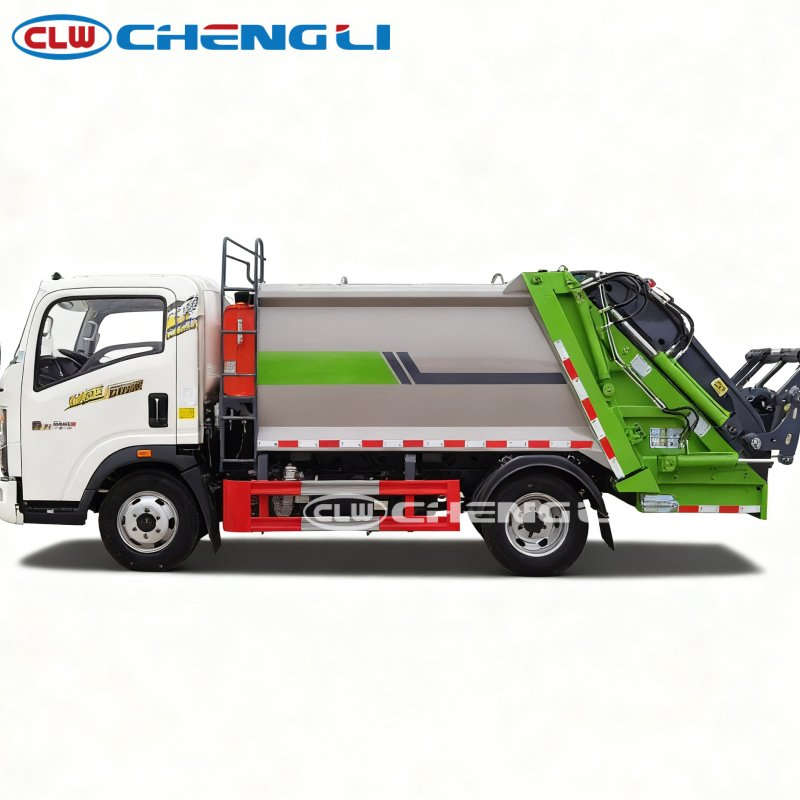
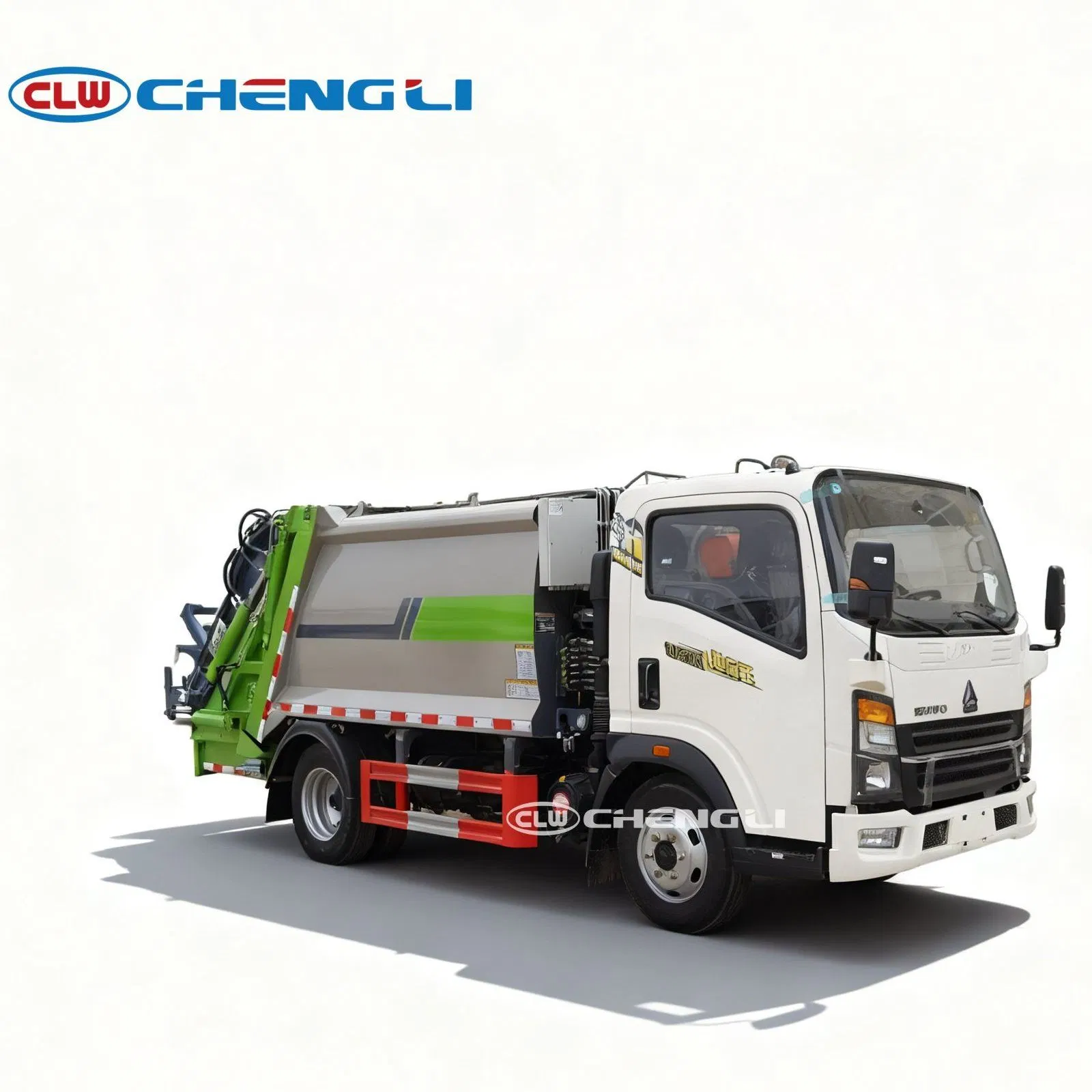
Hydraulic failure is the single fastest way to pull a garbage compactor truck off a municipal collection route. Across hundreds of field service inspections on waste collection trucks operating in humid coastal depots and dusty inland landfills, nearly eighty percent of premature pump, valve, and cylinder failures trace back to two preventable causes: contaminated ISO VG 46 hydraulic oil and unchecked leachate corrosion around the tailgate hopper.
Whether your fleet runs a 6-cubic-metre rear loader on tight residential lanes or a 20-cubic-metre tandem-axle unit hauling compacted domestic refuse, the same hydraulic fundamentals apply. The routines below reflect the exact workshop checks our after-sales technicians perform during fleet audits on rear loaders, skip loader trucks, hook lift trucks (often called arm roll units), and sealed food waste trucks.
Hydraulic Oil Cleanliness and Temperature Control
A compactor cycle runs continuously for six to eight hours per shift. Every time the slide plate and packer blade crush mixed refuse against the ejector shield, relief valves spike to 16–20 MPa and dump heat back into the hydraulic reservoir. If the oil level sits below the mid-glass mark, aeration starts immediately—you will hear a sharp whining pitch from the gear pump and feel spongy, hesitant blade movement.
Use clean ISO VG 46 anti-wear hydraulic oil for temperate and tropical climates, stepping up to ISO VG 68 only where ambient depot temperatures stay above 40 °C for months at a time—a specification we regularly recommend for fleets in the Middle East as detailed in our high-heat special trucks guide. Never top up a tank using open-mouth drums left in the yard. Dust and rainwater enter through the filler neck, turn the fluid milky, and score the brass thrust plates inside the gear pump within weeks.
On compact units such as the HOWO BLT5040ZYSZ6 garbage compactor truck or mid-size municipal rear loaders like the CLW garbage compactor truck, replace the return-line filter element after the first 200 working hours on a brand-new body, then every 500 hours thereafter. Drain and flush the entire reservoir every 1,000 working hours or twelve months, whichever comes first, and wash the suction strainer in clean diesel before blowing it dry with compressed air.
Cylinder Seals, Slide Rails, and Multi-Way Valves
Compactor hydraulics suffer heavy side-loading whenever operators try to crush construction rubble, tree trunks, or heavy timber pallets. Side-loading bends the chrome piston rods of the slide and scraper cylinders, chews through polyurethane wiper seals, and lets fine grit migrate straight into the barrel. Walk around the tailgate at the end of every shift and wipe the exposed chrome rods with a clean rag: a light oil film is normal, but weeping drips or scored longitudinal lines mean the rod seal kit must be scheduled before the barrel scores.
Equally overlooked are the nylon wear pads along the tailgate slide channels and the main body ejector tracks. When nylon sliders wear past half their original thickness, steel rubs against steel, driving up hydraulic working pressure and tripping the main relief valve prematurely. On skip loader trucks and Dongfeng hook lift trucks, inspect the lift-arm pivot pins, hydraulic locking hooks, and counterbalance valves with the same discipline—if you are still standardising your refuse fleet mix, our compactor vs skip loader vs hook lift comparison outlines how mechanical complexity differs across all three bodies.
Keep the multi-way directional control valve block clean and dry. In fleets operating on Sinotruk HOWO, Dongfeng, Isuzu, and Foton chassis across Southeast Asia and Africa, moisture ingress into the pneumatic or solenoid pilot caps is a frequent cause of sticking spools. Never aim a high-pressure lance directly at the solenoid coils or CAN-bus junction box on the rear right-hand control panel.
Daily, Weekly, and Monthly Compactor Maintenance Schedule
Preventive routines only work when drivers and workshop fitters share clear intervals. Post the following schedule on the depot wall and log each sign-off against chassis engine hours rather than odometer kilometres, because stationary compaction accounts for most of the PTO load on municipal sanitation trucks.
Interval | Component / System | Inspection Action | Pass Standard |
|---|---|---|---|
Daily (Pre-Shift) | Hydraulic tank sight glass & breather | Check oil level, colour, and breather cap screen | Between 2/3 and 3/4 glass; clear amber oil, no foam |
Daily (Post-Shift) | Tailgate seal strip & sewage tank | Drain leachate tank; flush hopper and rubber gasket | Zero trapped debris; gasket seats evenly along lock hooks |
Weekly (50 hrs) | Slide rails, pins, and PTO shaft | Grease all zerks with EP-2 lithium grease; check PTO bolts | Fresh grease purges at bushings; zero U-joint play |
Monthly (250 hrs) | Hoses, fittings, and nylon wear pads | Inspect braided hoses for chafing; measure slider thickness | No exposed wire braid; wear pads above 50% thickness |
Every 500–1,000 hrs | Return filter, suction screen & oil | Swap filter at 500 hrs; full ISO VG 46 oil change at 1,000 hrs | Clean magnetic drain plug; system pressure holds 18 MPa |
PTO Engagement, Leachate Corrosion, and Tailgate Seals
More gear pumps are destroyed by bad Power Take-Off (PTO) habits than by high mileage. Always depress the clutch fully on a manual transmission, bring engine RPM to idle, engage the PTO switch, and wait two seconds before releasing the clutch smoothly. Never drive the truck at road speed with the PTO engaged unless the body is specifically configured with a live-drive pump for city services and sanitation kerbside operation.
Acidic kitchen leachate is the silent killer of rear-loader subframes and sealed food waste collection trucks. Every evening after tipping at the transfer station, open the ball valve under the front and rear sewage collection tanks, rinse the hopper trough with low-pressure water, and clear compacted grit from the bottom groove where the labyrinth rubber gasket compresses. A torn tailgate gasket leaks foul water onto the road and accelerates rust along the tailgate lock hooks and hydraulic lift cylinders.
Before any technician steps between the body and a raised tailgate to clean seals or change a hose, always engage the mechanical tailgate safety prop rod on both sides. Never rely solely on hydraulic pilot check valves to hold a two-tonne tailgate overhead. Every unit leaving our assembly line undergoes pressure-hold testing under CLW quality control, but a burst hose or loosened fitting in the field drops an unpropped tailgate in a fraction of a second.
Compactor Hydraulic Troubleshooting Matrix
When a rear loader slows down mid-route, avoid turning the main relief valve adjustment screw blindly. Cranking system pressure above factory spec (listed in our technical spec sheets) masks a worn pump and splits hoses. Use this diagnostic table to isolate the root fault first.
Observed Symptom | Most Likely Cause | Workshop Check | Corrective Fix |
|---|---|---|---|
Packer cycle slow or stalls under load | Clogged suction strainer, worn gear pump, or low relief setting | Attach 25 MPa pressure gauge to main valve test port | Clean strainer; if pressure stays below 16 MPa, overhaul or replace pump |
Hydraulic oil overheats (>75 °C) | Stuck relief spool, low oil level, or worn nylon sliders binding | Check oil level and infrared-scan relief valve & slide tracks | Top up ISO VG 46 oil; clean relief valve; shim or replace wear pads |
Tailgate creeps down after raising | Leaking cylinder piston seal or faulty hydraulic balance lock | Raise tailgate, fit props, crack lower hose to test internal bypass | Re-seal lift cylinders or replace pilot-operated check valve cartridge |
PLC auto-cycle stops halfway | Dirty proximity sensor or broken limit-switch wire at tailgate | Watch LED indicator on proximity switch as slide passes target | Clean leachate buildup, set 4–6 mm sensor gap, or replace sensor |
Loud cavitation whine from PTO pump | Air leak on suction hose clamp or collapsed intake hose | Inspect suction hose between tank and pump; check oil foam | Tighten heavy-duty T-bolt clamps; replace softened suction hose |
Common Maintenance Questions
How often should hydraulic oil be changed on a daily-route garbage compactor?
Change the return-line filter after the initial 200-hour break-in and every 500 working hours afterwards. Drain and replace the full ISO VG 46 hydraulic oil charge every 1,000 working hours or once per year—shortening that to 750 hours in dusty, high-heat depots where oil darkens faster.
Can I switch from manual levers to PLC auto-cycle if a proximity sensor fails?
Yes. Most CLW rear loaders retain manual override levers on the main directional valve block so the crew can finish tipping a loaded hopper and return to the depot safely. However, do not run permanently in manual mode without repairing the proximity switch, as operators can over-stroke cylinders against mechanical stops.
Why does leachate keep leaking from the tailgate even after tightening the lock hooks?
Once compacted refuse or glass splinters flatten the rubber sealing strip, over-tightening the hydraulic lock hooks bends the latch brackets without restoring a watertight seal. Clean the mating channel thoroughly, check that the tailgate hinge pins are not worn out of alignment, and replace the labyrinth rubber seal strip as a complete length.
What spare parts should a municipal depot stock for a fleet of five compactors?
At minimum, stock return-line filter elements, cylinder seal kits (slide, scraper, and lift sizes), proximity switches, one spare gear pump matching your PTO spline, tailgate rubber sealing strips, and sets of nylon wear pads. Unfamiliar hydraulic terms in your parts book are cross-referenced in our special truck glossary.
Need genuine cylinder seal kits, gear pumps, or proximity sensors shipped by air courier to keep your refuse fleet moving? Review our warranty and spare parts support or schedule a remote hydraulic diagnostic session through our training and technical support desk. You can also explore more workshop guides in our maintenance hub, browse our full special truck catalogue, request fleet spares via get a quote, or contact our after-sales engineers directly with your chassis VIN and body serial number.
Discuss your truck requirement
Share your working task and destination with the CLW team.
Build Your Enquiry