
Maintenance on a fuel tanker truck or mobile fuel bowser truck is never just about uptime—it is a fire-prevention and legal-compliance discipline. A weeping shaft seal on a gear pump, a sluggish subsea emergency valve, or a frayed earthing reel turns routine diesel or petrol offloading into a serious vapour-ignition hazard on forecourts and mining pads.
Whether your fleet runs rigid multi-compartment tankers on Dongfeng, Sinotruk HOWO, SHACMAN, FAW, or Isuzu chassis, heavy fuel semi-trailers, pressurised LPG tanker trucks, or lined chemical tanker trucks, every fluid-transfer and safety interlock component must be inspected on a fixed calendar. Below is the practical checklist our service engineers apply across tanker truck fleets worldwide.
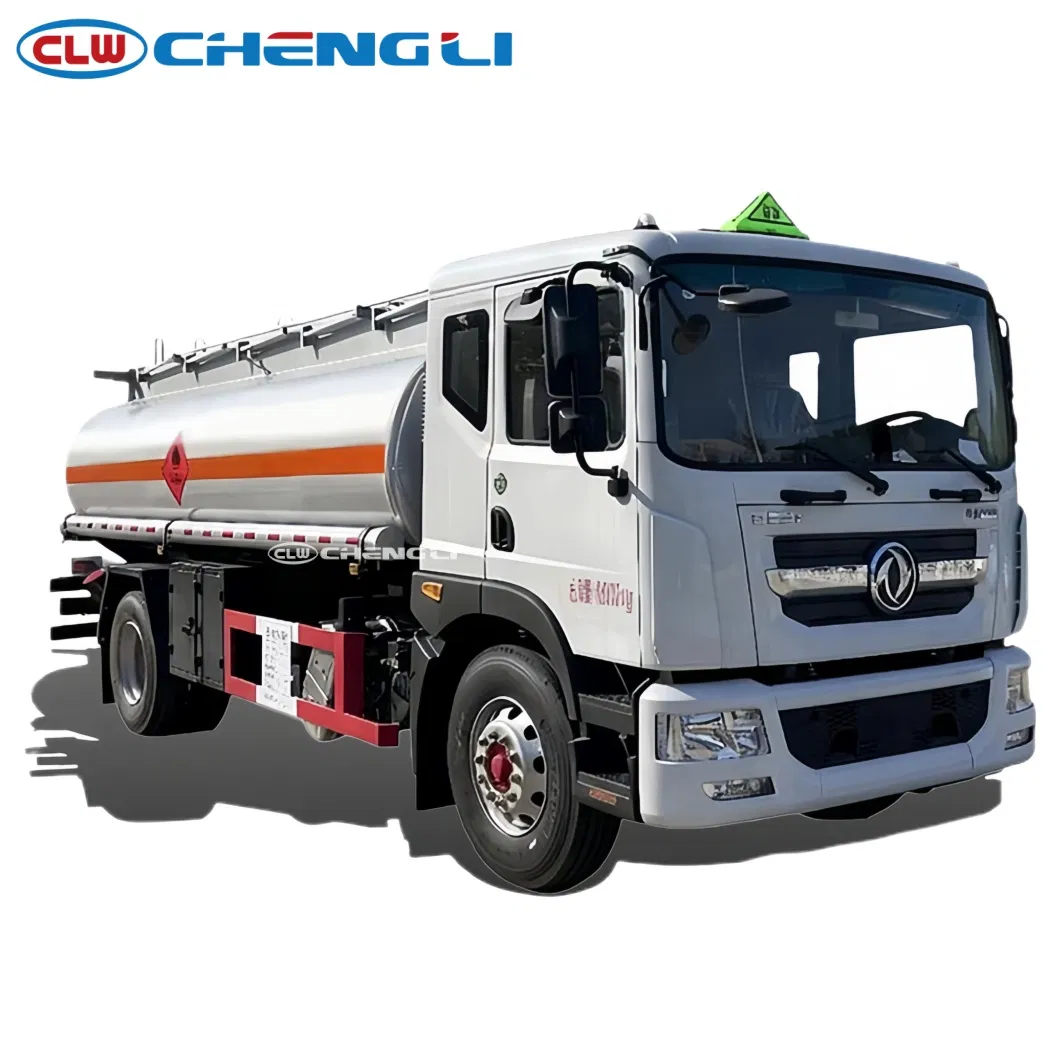
Emergency Subsea Valves, API Couplers, and Vapour Recovery
The emergency bottom (subsea) valve mounted at the base of each compartment is your primary line of defence in a rollover or piping impact. Because its shear groove is engineered to break cleanly while keeping the internal poppet sealed inside the tank shell, the pneumatic actuator must open smoothly and snap shut cleanly when the emergency stop button is hit. Test every pneumatic subsea valve and the remote emergency cut-off switch at the cab and rear cabinet before loading.
On bottom-loading tankers and bowsers such as the Dongfeng CLW5180GJY6E fuel bowser truck and Dongfeng CLW5129GJY6EQ refueller, inspect the API bottom-loading adaptor nose seal and the vapour-recovery interlock bar weekly. Hardened Viton O-rings cause slow drips during rack coupling, while a sticky pneumatic interlock prevents the brakes from releasing after loading—leading impatient drivers to bypass safety valves if workshops do not service them promptly.
For fleets evaluating different tanker configurations across oil, gas, and fuel distribution or remote mining and quarrying sites, our fuel tanker vs fuel bowser vs LPG tanker guide details how valve architecture differs between atmospheric fuel shells and pressurised ASME/GB gas vessels.
Fuel Pumps, Mechanical Seals, and Flow Meter Calibration
Self-priming centrifugal and sliding-vane fuel pumps fail prematurely when run dry during tank stripping or when rust scale from ageing storage depots bypasses the basket strainer. Clean the inline Y-strainer or basket filter upstream of the pump every week, and inspect the pump shaft mechanical seal for dampness or diesel weeping—never tighten gland packing blindly on a mechanical-seal pump, as dry friction cracks the carbon-ceramic face immediately.
On metered mobile refuellers serving plant equipment or construction fleets, dispensing accuracy drifts as meter rotors wear or air eliminators foul. Verify flow meter calibration against a certified 50-litre or 100-litre proving can every six months (or at the statutory interval required by your local weights-and-measures authority). Always check the air-eliminator float vent at the same time: trapped air bubbles register as phantom litres on the mechanical or digital counter, causing immediate customer disputes.
On LPG bobtails, replace pump maintenance with strict checks on the bypass differential valve, excess-flow valves, magnetic level gauge, and pressure-relief valves (PRVs). Never paint over PRV rain caps or hydro-test expiry stamps. Likewise, on stainless or PE-lined chemical tankers and food-grade potable water tankers (as well as industrial water tankers), confirm gasket chemical compatibility before every change of product grade.
Tanker Safety and Calibration Inspection Schedule
Follow this structured maintenance schedule across tropical and arid operating regions—including Africa, Southeast Asia, and high-ambient depots in the Middle East (where thermal expansion rules in our high-heat special trucks guide are critical).
Interval | Safety / Mechanical System | Inspection Task | Pass Criterion |
|---|---|---|---|
Daily (Pre-Load) | Static grounding reel, fire extinguishers & spark arrestor | Check reel cable continuity, gauge pressure, and exhaust arrestor | Continuity <10 ohms; extinguishers in green zone; arrestor intact |
Daily (Pre-Load) | Subsea valves, manifold & drain cocks | Cycle emergency shut-off; check for drips under manifold | Instant shut-off response; bone-dry fittings and dust caps |
Weekly | Pump strainer, hose reel & manhole gasket | Wash basket strainer; inspect delivery hose for blisters/kinks | Clean mesh; zero hose swelling; manhole dogs tight |
Monthly | P/V breather vents, overfill sensors & battery isolator | Test optic overfill probe; verify breather free movement | Rack controller green; isolator cuts all chassis power cleanly |
Semi-Annual / Annual | Flow meter calibration, hose pressure test & shell check | Proving-can calibration; hydrostatic hose test; weld/mount check | Error within ±0.2–0.3%; zero weeping at test pressure |
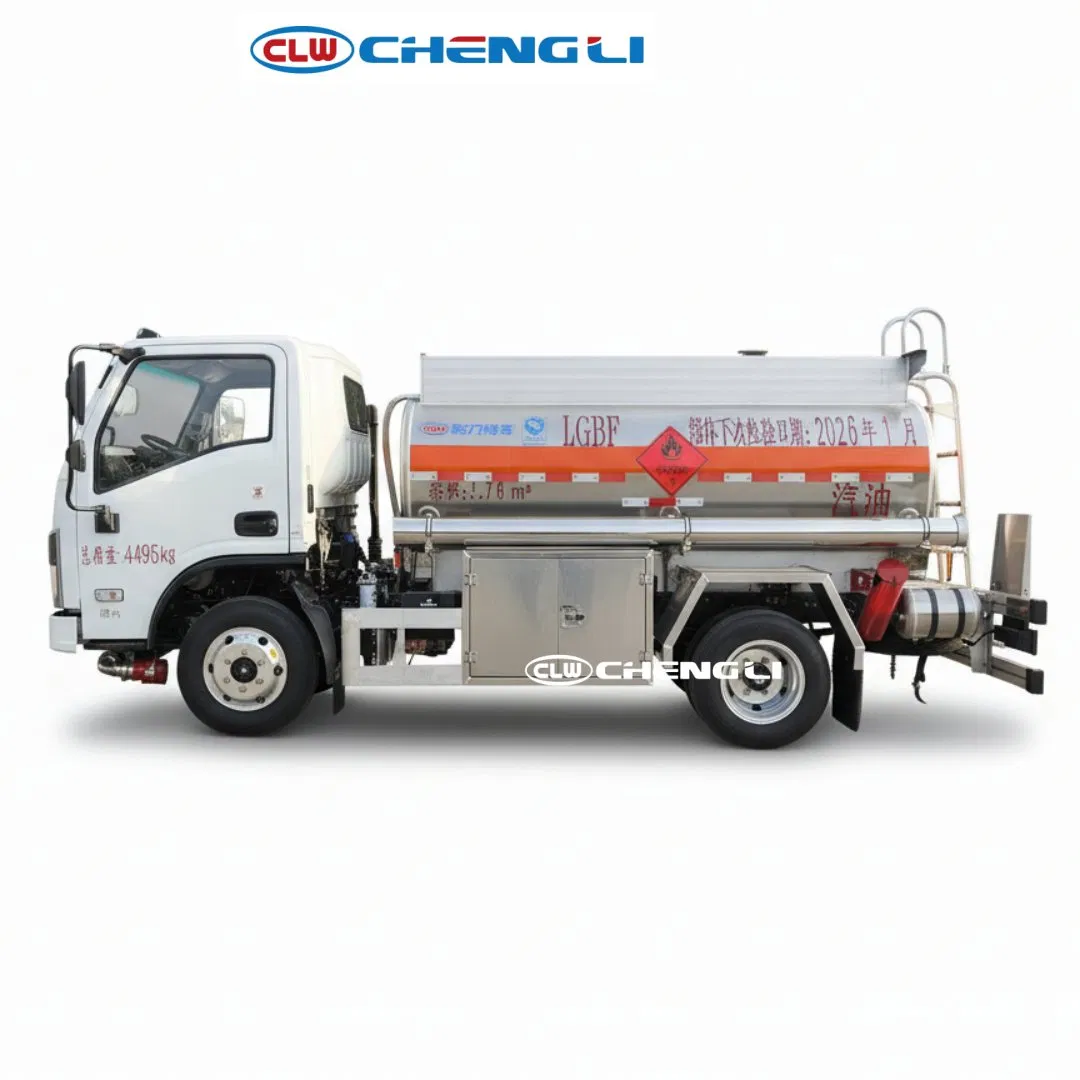
Static Grounding, Manhole Breathers, and Chassis Safety Hardware
Electrostatic discharge ignites fuel vapour faster than an open flame. Inspect the copper earthing clamp teeth, retractable reel spring tension, and trailing antistatic drag strip every morning. A painted chassis bracket or rusted bolt under the reel mounting plate breaks electrical continuity even when the cable looks intact—verify end-to-end resistance from the tank shell to the clamp jaw with a multimeter monthly.
Climb the top walkway safely (using fall-arrest rails where fitted) to check the pressure-vacuum (P/V) breather vents mounted inside each 500 mm manhole cover. Stuck breathers create dangerous vacuum while pumping off, capable of collapsing an aluminium or carbon-steel tank shell inward in seconds. At the same time, verify that the front-mounted exhaust spark arrestor is clean of carbon soot and that the dual-pole battery master isolator switch cuts power cleanly without arcing.
Every shell leaving CLW undergoes X-ray weld inspection and hydrostatic pressure testing under our factory quality control standards, with valve brands and ADR-style safety packages tailored through customisation and OEM engineering. Keeping those safety devices clean and tested in service is what protects both your driver and your depot licence.
Fuel Tanker Troubleshooting Matrix
Never weld, grind, or use non-intrinsically-safe power tools on or near a fuel tanker until the shell has been professionally steam-cleaned, gas-freed, and certified zero-LEL. Use this diagnostic table for safe mechanical troubleshooting.
Observed Fault | Likely Cause | Safe Inspection Step | Corrective Fix |
|---|---|---|---|
Pump fails to prime or delivers slowly | Clogged strainer, closed subsea valve, or suction air leak | Check pneumatic pressure to subsea valve; open strainer lid | Clean basket mesh; repair air line to subsea actuator; replace flange gasket |
Fuel drips from pump shaft housing | Worn mechanical seal or scored pump shaft sleeve | Stop PTO immediately; isolate subsea valve and inspect seal | Replace mechanical seal kit and Viton O-rings; polish or swap sleeve |
Dispenser meter reads high or erratic | Air ingress on suction side or fouled air eliminator | Check sight glass for bubbles; inspect eliminator vent line | Tighten suction couplings; clean air eliminator float; re-calibrate meter |
Brake interlock stays locked after loading | Stuck API guard micro-switch or trapped air in interlock valve | Inspect vapour-recovery and cabinet door pneumatic limit valves | Clean and lubricate plunger; replace damaged pneumatic limit switch |
Strong fuel odour around top walkway | Perished manhole rubber gasket or weeping P/V breather | Inspect manhole cover seal ring and breather poppet seat | Replace fuel-resistant NBR/Viton gasket; clean and reseat breather |
Common Maintenance Questions
How often should fuel tanker delivery hoses be pressure-tested and replaced?
Inspect delivery hoses visually every week for cover cracking, kinking, or soft spots, and perform a hydrostatic pressure and electrical-continuity test at least once per year. Replace any hose immediately if wire reinforcement shows, couplings weep, or resistance exceeds standard continuity limits—most active refuelling fleets replace reel hoses every two to three years.
Why did my tanker compartment walls pull inward during offloading?
That happens when the manhole P/V breather valve or vapour-recovery vent is blocked while the PTO pump draws fuel out rapidly. Never pump off with a taped or rusted breather; service the P/V vent monthly and verify free poppet movement before high-flow discharge.
Can I switch a carbon-steel fuel tanker from diesel to aviation fuel or petrol?
Switching between diesel and petrol requires thorough draining and flushing to avoid flash-point contamination, and petrol requires properly functioning vapour recovery and flame arrestors. Aviation Jet A-1 should never be hauled in an unlined carbon-steel tank—it requires dedicated stainless steel or epoxy-lined aluminium shells per our tanker specification sheets.
What critical spares should a fuel distribution depot keep in stock?
Stock Viton API coupler seals, pump mechanical seal kits, basket strainer meshes, manhole gaskets, pneumatic subsea valve repair kits, spare earthing clamps, and calibrated flow-meter seal wire.
Need genuine subsea valve seal kits, mechanical pump seals, API couplers, or certified dispenser spares? Contact CLW warranty and spare parts or arrange fleet safety training via training and technical support. Explore more practical service checklists in our maintenance hub, view our complete special truck lineup, or reach our after-sales engineering team directly with your tanker serial plate details.
Discuss your truck requirement
Share your working task and destination with the CLW team.
Build Your Enquiry